
A Conformity To Intelligence

2000 years ago, Marcus Aurelius wrote: Every instrument, tool, vessel, if it does that for which it is made, is well … In the things which are held together by nature there is within and there abides in them the power which made them … wherefore if thou dost live and act according to its will, everything in thee is in conformity to intelligence.

Whatever label one might choose for Webb Chiles, steadfast comes readily to mind . His life could be used as a case history of that virtue. Upon reflection, however, the more fitting adjective seems to be intelligent. To conceive, at a young age, the course of one’s life and embark resolutely on that course is the mark of an uncommon mind.

Chiles has made six circumnavigations, single handed for the most part, and written seven books about his exploits. These bald facts, though, don’t tell the story. Of his written works—all good reads—The Open Boat: Across The Pacific, and that book’s sequel, The Ocean Waits are the most compelling. To paraphrase William James, the books expose Chiles as a man intent upon ‘… tearing his conceptions from the continuum of felt experience.’

The books recount his attempt to sail around the world alone in an open boat. The boat chosen was an 18 foot Drascombe Lugger, named Chidiock Tichborne. A stout craft, she was pitch poled in the South Pacific after colliding with some object just below the surface, and was awash and a shambles when righted. He wrote: I just lay there, thinking, as do all wounded, how much had changed and how quickly, in the passing of a single wave. The sequel offers more of the same: from gales in the Indian Ocean to a jail cell in Saudi Arabia.

Intelligence guided by experience and a simple ability to endure earned his survival.

By his own reckoning, Webb Chiles has spent eight years of his life alone at sea. His preference, obviously, is for the open ocean. He resides on Skull Creek near the Atlantic, but it is a vexing business to reach the open sea from Skull Creek. Flukey river winds, miles of shoal water, and the torrent that is the Gulf Stream make leaving the land a tiresome business. Which is not to mention the frequent passage of large, notoriously indifferent vessels bound elsewhere.

Chiles is amazed to find himself 83 years old. He continues to sail. He continues to write. He continues to do his age in pushups. He continues to be the man he has become.

Countless magazine articles have featured Chiles, countless interviews. Three films have been made about his singular life. The Story Tellers, produced by Safe Harbor, may be the best of the three.

A link to the video is posted below. Watch the video; the man is a compelling story teller. His web log is ‘Self-Portrait In The Present Sea.’

The Story Tellers

The books of Webb Chiles are available at many vendors. Most are offered as either print books or ebooks. Some have become collectors items.

The Bulls

Jacques Brel (1929 – 1978) wrote hundreds of songs during a long career that spanned four decades. He sang them with gusto. His lyrics, he claimed, were impossible to imagine ‘ … without the sound of music intruding.” Born in Belgium, he is revered in France; yet remains relatively unknown in the United States. His disgust with American belligerence in Viet Nam kept him from touring here.

The lyrics from his song ‘The Bulls’ are posted below; and a link is provided to listen to the song as performed by Shawn Elliot and Company. The Company is Mort Shuman, Elly Stone, and Alice Whitfield. Shuman was a friend of Brel, and it is his production of Jacques Brel Is Alive And Well And Living In Paris that contains the best translations and covers of Brel’s work.

Song lyrics and link to song on page 2.

The Language Of Whales

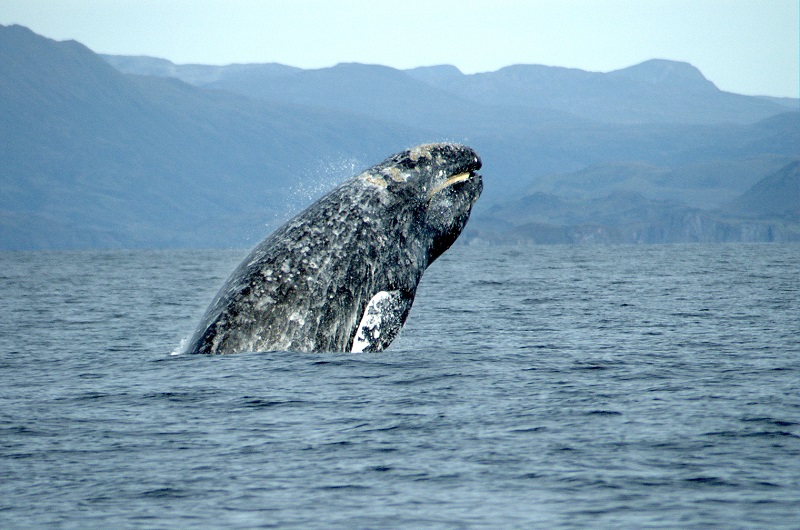
Katharine Payne, a student of both music and biology during her undergraduate years, combined those interests to discover and document the songs of humpback whales. Since the late 1960s when this research began, these ‘songs’ have entered into the realm of common knowledge. This familiarity and a rather egocentric tendency that homo sapiens exhibit towards other species seems to have trivialized whale communication.

Whales have their own language. It is as simple as that. Humans are not unique in their ability to communicate. In fact, an argument can be made that human language, at best, is rather clumsy and inefficient. If one considers end results, all of human history and the current state of the planet provide all the facts anyone might need to make such an argument. The good that has been accomplished by our species seems to have been done by small groups of people working locally, people who have overcome the language barrier.

What evidence is there that whale sounds are no more than the equivalent of our grunts and groans? A discovery by Dr Payne made in 1969 is one piece of the puzzle. She found that whale songs change over time. As winter approaches, all the ‘singers’ in a particular breeding ground will start singing the previous winter’s song. By the end of their migration and the time spent at their feeding ground, these whales will be singing a new song, a very different song. And all the ‘singers’ in the population will have learned the new song. Obviously, something more complex than grunts and groans is going on here.

Katy Payne asserts that the humpbacks do more than just ‘talk’; they are using their language to compose and make their own brand of music.

The salient fact about all communication within and between species (except humans) is that of integration. Whales are one with their environment, perfectly adapted to all contingencies of life at sea; and the same might be said of aardvarks and zebras and everything in between. And though some humans speak disparagingly of nature red in tooth and claw, the relationships between species and with the environment generally is symbiotic. Are there malicious beasts in the jungle? Nasty brutes that prey on the weak simply from some perverse enjoyment of inflicting pain and suffering?

Only homo sapiens.

Our language seems, by design, to confuse and confront, to set us apart from one another and from the world around us. Of the three or four languages with which I am familiar, this conundrum is particularly true of English.

Music, however, does seem to be a different behavior all together. Perhaps the whales are on to something. Perhaps what we all need to do is talk a whole lot less and sing a whole lot more.