INTERNMENT

The old motor home stood with hood propped open, rusted fender prominent, tires with but a vestige of tread, sidewalls cracked, appearing abandoned save for the two wooden stools, small table with tea service set upon its varnished surface. The woman, as slowly became apparent for, at first glance, he had mistaken her for a man, turned and rose in one graceful motion to face him.He bowed his head briefly in acknowledgement. The habit would not be broken; his grandparents, both born in Kyoto, had insisted.

The woman’s height and slender build, her short cropped greying hair, her dark eyes mirrored his own; but where his face was a flat plane with rounded cheek bones and jaw, hers was oval yet angular. His was bland and undistinguished; hers was predatory and insisting.

An alter ego, he thought, my doppelganger. My grandmother and her yokai. How odd.

“Hello,” she said.

“Hello.” He took a step forward. “I heard a shot. Two shots.”

The trace of a smile.

“Everything all right?”

“Yes.” She turned her head slightly, opened a hand to the table. “Would you care for a cup of tea?”

Yuki hesitated. He had heard loud reports that seemed very like rifle shots. This woman … an awkward moment. She must have seen him come up from the cabin. And made tea?

She arched eyebrows, an inquiry.

He nodded.

They sat together quietly. 

The cups, he noticed, were small well shaped inexpensive utensils that yet retained a charm, elegance even. He turned one in his hand.

“Suitable for … chanoya is the Japanese tea ceremony; integral,” he explained, “to our traditions.” He lowered his head, looked up, and said, “I have never been to Japan.”

“In Buenos Aires,” the woman replied, ” a small community of Japanese  adds a good deal of aesthetic panache to the drab character of Argentinians. My father sponsored a family. 1959, that was.” Her smile, just a slight lifting of her cheeks, a widening of her dark eyes, accompanied a memory. “I was ten years old and enchanted by the grace of these people.”

The green tea brought the earthy reminiscence of his grandparents sitting on tatami, legs dangling in the recess beneath the horigotatsu, the low table on which they ate their meals, always rice and vegetables, broccoli, cauliflower, cabbage, brussel sprouts, and pickles, the large white pickled radish named takuan after the zen man who made them for his wanderings.

“They were contained by their rituals.” Absently said, looking away, a copse of juniper giving way to the pinyon pine, that imperiled tree, enclosing the dirt roadway, the shade inviting, and beyond he knew was the high pasture where the sheep grazed, and then the granite uplifts, and jutting peaks  still snow patched.

His grandparents had emigrated to Canada in the 1920s, the sixth child, the fourth son, prospects dim. Farmers, they worked their way south from the Fraser valley to Bellingham. Not able to buy, they rented and saved; a produce stand became a store. His father and two aunts all worked and saved and educated themselves.

But 1941 changed all that.

Yuki sipped tea. Internment was not Auswitz. He had argued that point a score of times. Still …

She lifted the pot and poured. Swirls of steam rose from the half filled cup.

“I never left,” he said.

The candid admission surprised him. He exchanged looks with the woman. Lucia? Was her name Lucia? She had two sons: they farmed near Basin. His memories drawn out by an acceptance in her eyes.

At war’s end, his grandparents had moved to Ontario, just beyond the former exclusion zone. Raised there, Yukio had ventured as far as Corvallis, to Oregon State, for his education. Then returned to settle just east at desert’s edge, in Twin Falls. From there he had begun watering the seeming waste that had blossomed in green verdure.

“Those green crop circles, one after another seem aberrations,” she said, a slight, questioning tilt of head, ears without lobes, “caricatures, I think, artificial design.” A shrug. “Mal aconsejado, as we once so glibly labeled all false notions of our compatriots. Have you read Borges?” she asked.

He had not. He had not heard of the man.

She nodded slowly.

“But they feed millions,” he said, adamant. “Those ‘aberrations.’ They have transformed this entire crescent of desert.”

“Perhaps it were better off desert.” A slight lifting of her shoulders.

Uncommon, her way of speaking. Spanish her first language? But well educated.

“Our Pampas, now fenced and parceled. It, too, might have preferred to be left alone. Borges and his intellectual compatriots argued quite persuasively for modernization. Jorge Luis Borges. He has become the centerpiece of Argentinian literature.” A short laugh followed. “But I seem to have gotten some distance ahead of myself. Your passion for green circles—a product of your rigid rituals, perhaps— have led me astray.”

“Japanese would disagree with your ‘rigid’ I think. Traditional rituals are well rounded. It is modern Japan that remains all angles.”

‘You have given this some thought.”

“Long straight roads between here and Twin Falls.”

“And we would ride from dawn to dusk. The Pampas seemed never ending.”

“Not Basque then.”

A laugh.

“No. Gaucho, from Patagonia.”

“I am sorry.”

“Not at all. A common misconception. I take it  as a compliment. Not much to chose between Gaucho and Basque. I am morisco, a person of color, as were, as are, the Basque, and we, as were they,  were ostracized and often despised.”

Ga-u-chos,” attempting her pronunciation.Three syllables?”

A nod. “On the Pampas vowels are allowed to to roam free. Borges did not understand. Modernization, industrialization was our internment, we gauchos. Not as dramatically as were your grandparents, but interned all the same. Barbed wire and greed ended the free range of the Pampas, ended our way of life.”

“And you came here?”

“Ah, I was brought here. After an idyllic childhood on horseback,  with guitars and singing, dancing, growing as did the strength of our maté, chewing charqui, your jerky. eschewing vegetables as effeminate and beneath us, then the university and immersed in words, enchanted by poetry.” She paused, reflecting. “Then I married. My husband lived here. Here I came.”

“I have heard of your yerba maté. A store in Ontario sells it, where I buy my matcha, my green tea.”

“And does this store also stock the gourds and bombilla  used to prepare mate, the utensils now sold at exorbitant prices for such common implements?”

“I don’t think so. No gourds.”

“Our maté and your matcha make an interesting pair, both with their ceremonies, different yet not so different. Perhaps … ” She left her thought unfinished. A trace of her smile. “Our little rounded rituals. Very effective at melting the indifference or reticence of strangers.”

Between these two a silence then ensued. The heat of the day waned. To the west the crescent of what once was desert now pocked with the green inevitable circles of center pivot irrigation. Just to the north, Minidoka, and beyond, the moonscape of ancient lava flows.

He nodded at the propped hood. “Overheat?”

She followed his gaze. “No,” she said. “The report you heard … “

“Ah,” nodding.

“A recalcitrant spark plug escaping the confinement of a despotic old motor.”

“Yes. On the exhaust stroke, Newton’s third law. Of course. The plug had loosened and was ejected.” He sat forward. “I can fix that for you. A simple business. And then you can be on your way.”

She raised eyebrows. “And you, too, can be on your way. Things to do. People to see.”

“No, no, I didn’t mean … “

She laughed, her head tilting back, her tawny face embracing the startling white crescent of her teeth.

He dropped his head, and with a slow shake left and right, deplored his usual indiscretion.

“I am content here,” she said. “My sons will come.”

He stood and shoved hands into pockets, looking off across the valley.

Then, “Stop by sometime,” he began, “for … tea …  the cabin in the stand of juniper, just … ” hesitating, “Come for tea, you’d be welcome, if you wished to,” trailing off.

Tensions muddle our tenses. His grandmother’s phrase. Jisei wo magirasu.

And shimatta quickly thought but but bitten off, not said.

“Maté and matcha,” she said softly. “But perhaps without the ceremony.”

“Yes,” he said. “No ceremony. Just tea.”

“The post with the weathered boot upturned over its top.”

He nodded. “Just beyond the junipers.”

“I’d like that,” she said. “Just tea.”

The Blindman

This story is an exceprt from my novel THE ILLUSION OF PLURALS (2002).

The trail up to the snowfield, the snowfield itself, even that last steeper section through the Watercourse would pose no difficulty. A plod, thought Murchison. He walked up a shallow grade along a side hill above a creek. The trail followed this creek for several miles through a dense, mixed stand of fir and cedar trees. The chafe of the pack straps and the jar of his footfalls occupied Murchison. Dougal trotted easily ahead of the man. Robins whistled; jays shrieked. On the steeper pitches, the creek rippled and murmured; the clear, cold water coursed over gray and brown and red rounded stone.

Stiff with the hike in and the nights out, Murchison adjusted the straps of his pack over the bulk of his parka and pulled his wool cap down over his ears. One step followed another; one step, then another and another and another, working into a rhythm, one foot after another. He envied the dog’s easy trot.

This is how it’s done, Murchison thought. You just plod along. Anyone could do it. Endurance. That’s all it took to climb most mountains. All you need to be is perverse.  Obstinate. “Hey, dog,” the man called. “Don’t look so happy with this business. Mangy crut.” Having a swell time, he is. A swell time.

The dog slowed and turned, tongue hanging from the side of his muzzle, looking back at the man, then loping away again, wolf trot.

As the man zigzagged upwards, he left the creek behind. The trees thinned becoming stunted and bent, wind swept, one side nearly bare; and Murchison felt the sting of a sudden gust. The rain had stopped, but the sky promised storm. An oatmeal sky, Murchison thought. Claire’s line. Another gust ruffled the dog’s coat. The cloud thickened, and the dog would appear and disappear and appear again. A wide spaced row of short, gnarled firs marked timberline. The man could distinguish nothing more above him. There was the dog’s shape, coming and going, and a persistent, chilling overcast.

Wind from the southwest, Murchison thought, feeling the cold on the right side of his face. Gusty up here. From this spot, he remembered, was a fine view of the summit of Grants. On a clear day. And off there somewhere, the northwest buttress. Mist swirled, condensed in the cold air, freezing; and he heard now the distinct crunch of the snow with each step. Above him, he heard the dog’s muffled bark.

“I’m coming, mutt,” the man called out. “I’m coming.”

Perverse and stupid. That pair. And, yes, dog, I’m still coming.

Dougal came back at a run, suddenly appearing, barking, turning, spinning about only to run off up the snow slope. Through the light, wet snowfall, Murchison could see the dog rolling in loose drifted snow, nuzzling and nipping at the furrows he made using his muzzle as a plow. Patches of old snow, gray and gritty with pumice dust, still lay exposed on wind blown slopes; the flats and hollows were white with new snow.

“First stop,” Murchison said. MacKenzie Snowfield. The Blindman.

Pulling an arm from a strap, he swung his pack off and down. This knapsack he carried now weighed no more than fifteen pounds with just the essentials. He had left his bigger frame pack hanging from a tree at the lake.

Seems heavier, he thought. This little pack. Too heavy. Too soon.

The dog rolled and  nipped at the snow, snarling, barking, stopping to look at the man.

“It’s break time,” he said to the dog. “And time to put on the rain gear. And dig out my moth eaten balaclava.” Gloves. Won’t do to get soaked through. Hypothermia, killer of the unprepared. Where had he read that? Some Forest Service handout, he thought.

“I’m gearing up, dog. You’re on your own.”

Lucky beasts, he thought. No problem with vasoconstriction. No frostbite. Little chance of hypothermia either. And no doubts. None. Not one. The best part, probably. No doubts.

“Any second thoughts, dog? Is this weather to your liking? A lovely day.” Lovely.

The dog chewed at the snow balled between his toes.

“We’re a little behind schedule, Dougal,” Murchison said. “You’re going to have to step up the pace  a bit if you expect to have any chance at the summit. Cut out this lollygagging. I’ll tell you though, boy, this mountain in this weather is no place for errors of judgment. You understand me, dog? Let’s have no errors of judgment, shall we, mutt.”

The dog sat with his ears up, head turning from side to side, listening to the man. A gust of wind raised the thick hair on the dog’s flank.

“Well,” said the man, “let’s be going then. Burning daylight.” He slipped the ice ax from its loop on the back of the pack.

Cloud engulfed them, and a gust swirled the mist into whorls of light and dark. Sleet stung the man’s cheek. His yellow anorak glistened with wet. His footsteps began to pock the snow cover. He plodded upwards. Scrambling through a boulder moraine, he reached up for a knob and felt the damp cold through the padded palm of his gloves. He unrolled the balaclava down over his ears and the back of his neck, and pulled it up to the tip of his nose. His arms swung by his side, and the plant of the ice ax on the steepening slope established a rhythm, slower now, slowing as the Blindman steepened. The thick knobby soles of his boots crunched upwards. One step, then another.

The mountain with its snow and the sky with its sleet were all of a singular grayness. No telling where one ended and the other began. Hoped I could have climbed out of this weather. Thought it might pass. Thought that. Showers and clearing. The forecast had talked about some clearing. Maybe not here though. Maybe there. Where? Here, there. Everywhere.

His calves began to ache. His toes felt numb.

No, just cold. Not numb. No feeling with numb.

He could feel the tightness in his hips from the long hike in, an ache in his knee joints. Ahead, the dog, back matted with wet snow, turned its head to look at the man. Murchison plodded on. He came to a steepening pitch and, leaning on his ax, stopped. Looked about. Nothing to see.

Some clearing would be good, he thought. Good to get out of this soup. Soup. No, that’s not right. Not a good analogy. Or metaphor. Whatever. Too damn cold for soup.

“You know, dog,” he said quietly, “for two bits I’d quit this little venture.” He brushed snow off his arms. “I’m coming, dog,” he said louder. I’m coming.

Doggedly. Standing still.

Dougal had kept on, and had disappeared in the swirl of snow above the man.

What a silly thing to do. Waiting for a bus, old man? Having a look at the view, are we?

What view would that be?

Pushing at the cuff of his anorak,  he uncovered the face of his watch. He knew, with the weather, the climb would take a good deal longer than planned. Another three hours on the snowfield. Then two more up the Watercourse.

“Five hours,” he said. Then five more down. Or four. Piece of cake. Sure.

From above came the dog’s bark. Murchison whistled back, and the dog came ambling back, snow covered, tongue hanging.

“Snowing,” the man said to the dog. “Not about to go away.” Not this stuff. Not about to. Or three. Or four. “Snowing. Now that’s right.”

Stupid. Perverse. Obstinate. Cross-grained. Pigheaded.

“You know that, don’t you, mutt? Going to snow. That make a difference to you at all? No difference to me. None at all. Take longer, that’s all. So we’d better get on with it, dog. Time’s wasting.”

Mulish.

Dougal burrowed his muzzle into the snow, haunches up, stub tail working back and forth. He flopped down, cocked his head at the man, and barked. The man grinned back, wadded a ball of snow, and tossed it at the dog.

“Let’s get on with it then,” he said.

Sleet stung the side of his face as he started upslope, and he squinted his eyes against the bite in the wind. And as he climbed he felt the cold numbing his toes, his feet, his fingers. Every twenty paces he stopped to gather himself, leaning on his ax. Each step needed intention; each step was harder than the last. 

Intent.

Harder.

He felt the pull of his pack, the grinding labor of lifting his leg and planting his foot for purchase.

Purchase.

Poking small holes in the snow with the pointed ferrule of the ax, he looked off into the blowing, drifting snow.

“Well, hard guy,” he said, “what are you going to do about this? You are becoming rather reluctant, hard ass.”

I’m reluctant, all right. Good word, purchase. Here on this slippery slope. I wish I could get the boots flat. The old ankles just don’t flex quite enough. Kicking a hole to stand in just bruises the toes. Holes for purchase. So I don’t lose my grip.

Reluctant. I am that.

“You’d better make up your mind, tough guy.” Fish or cut bait.

Question: Is there a point of no return?

Melodrama. The point of no return. Damned ominous, that is. No deposit, no return.

“Dougal,” he called suddenly, missing the dog. Where the hell is that beast? “Dougal, come, boy. Dougal.”

Point of no return. You’re past it, you old fool. Too old. From the day you were born. Past the point of no return. Don’t kid me.

Question: Can you come off the summit or the Watercourse, for that matter, in this weather?

Answer: That’s what a compass is for.

If you only knew the bearing. And remembered to look at the compass. And the bearing is marked on the compass. I did that before I left. So don’t kid yourself too much. But what’s the point? This isn’t Everest. Why take the risk?

The dog had come back to the man, and sat looking up at him, covered with the snow, feathers on his forelegs clotted with hanging clumps of hard balled snow.

“I want to do the Blindman,” Murchison said. “Do the snowfield. Do that much.” Then we’ll see. Not much longer now. “We’ll do the snowfield, mutt. The hell with it.”

Dougal turned his head, ears cocked, and whined at the man.

“We’ll worry about the Watercourse when we get there. Let’s get, boy,” he said. “Freeze your ass off standing here.”

Freeze your ass off, someone said. Freeze your ass off, he heard someone say. Freeze your ass off.

They trudged up the snow slope. His toes had numbed; and he began vigorously wiggling them each time he planted the foot. He would count five paces, stop and stomp his feet.  Only his eyes and the bridge of his nose were exposed now, but his face ached with the cold. With the back of his glove, he wiped at his nose. Large flakes of snow swirled about him. The wind began to hum.

Freeze your ass off.

Murchison counted one, two, three, four and stopped, leaning over his ax. He pulled off a glove, unzipped his anorak, and fumbled in a pocket for his compass. The small rectangle of clear, plastic dangled from its red lanyard held by the fingers of his hand.

Time for a bearing. Bread crumbs to find my way home. Time to do that. No time to lose. No place. No place in time. Time for a muling. A pigging. To his left, somewhere in the muck … snowing, snowing pretty good, snowing sideways. Listen to it. He braced himself against the wind. Somewhere over there is that northwest buttress. Butt hole. Crevasses. Where the glacier turned and stretched and compressed. Stretched and compressed. Erudite bastard. Cracks up, it does. We’ll stay away from there. I’m no fool. Dead ahead is the Watercourse. Dead. Ahead. And over there, somewhere, drops off to Hell’s Kitchen. Abandon all hope ….

And Murchison laughed out loud. He had rolled the balaclava down over his chin, and now fumbled with his bare hand to tug the wool away from his mouth, to breath. The dog lay beside him nearly covered with snow.

“How you doing, boy?” Murchison said to the dog. “How you doing, boy?”

The dog nuzzled and licked his hand.

“Jesus,” the man said. The tips of his fingers were numb. “Jesus, I’ve lost the damn glove.” Murchison stood staring at his hand.

Done, he thought. Enough.

He half turned, facing the wind and snow.

Point the compass down the hill and go.

He should.

You should.

He lifted his hands and looked at them. He turned away from the snow and wind and stuffed his bare hand into a pocket.

Jesus.

No compass. Nothing to see. Cold and getting stupid. Classic. He squinted off down the mountain. Just the wind and the cold. An awkward turn downhill on the steep slope, cursing the wind, cursing the snow. And off down the mountain we go, me, myself and I. And that dog.

That dog. Follow the fall line home, dog. Go on now. It’s time. Time.

Mechanically, the man went. His steps, his gait, jerky, lunging down the slope, braced now against the heel plant, leading out with another step, like falling, bracing, one handed, lopsided, following the dog home. He had thought once to merely follow his tracks down; but he had forgotten. He had thought to take a bearing, but he had forgotten that, too. Forgotten that he had lost his compass, his glove. There was just the clumsy march down and down following the dog, trailing after, boot burying in the snow, lifting, stepping, down and down.

The oatmeal sky and shards of snow bore down on him. Lurching down, almost running, seeing nothing but the stub of the dog’s tail,  hearing just the hum of the wind. Then his boot broke through a crust of snow, and his weight and momentum buried his leg to the knee, pushed down into the hole and stopped, suddenly. With boot and leg pinioned tight in the hole he had made, the man toppled forward, twisting, with a cry of pain and the dog’s bark. Murchison’s leg stopped abruptly, but his body toppled over quickly and he lay face down in the snow. He lay there, face down, breath harsh in his throat.

I have to get up.

You better get up, someone said.

Pushing himself to his elbows. No pain. Good. Ax. Get up  out of this. Ax.

“Where’s the god damn ax?” he said.

Dougal walked circles around the man, whining.

Left it. Somewhere.

You’d better get up.

I’d better get up anyway. Better if I get up.

He pushed himself up with his hands and then rocked back onto one knee, and then sat down. He took the other knee between both hands, and pulled the boot from the small, black hole. Panting with exertion, Murchison scooted himself back uphill and sat, legs extended. The dog lapped at his face.

Stand up now, he thought. Good idea. Stand up now.

He rolled to his knees, groaned with the pain, hung his head, spit. Slowly he pushed himself up, supporting himself on the good, left leg; but as weight came onto the other leg, it gave beneath him and again he fell, a sharp gasp, a cry, groaning, rolling from his knees to sit with hands grasping his bad knee.

The dog continued to circle him. He barked once, and sat beside the man.

You’d better get up, hard ass, someone said.

You’d better get up, mimicking.

Murchison sat holding his knee, rocking back and forth. “Well, dog,” he said.

The dog sat watching him.

Well. “We’ll try it your way, pup.” All fours.

All for one, one for all …

He stared at his bare hand. “God damn,” he said. He struggled out of his pack, rummaged to find the extra socks. Need to cover that hand. Need to.

Forgot. Forget it. Done’s done.

He slipped both socks over his numbed hand.

Time to go. Dog style.

You’d better get it up.

Ha ha ha.

And someone laughed.

Caw caw caw.

Murchison moved off down the mountain on his hands and knees. The dog walked beside him, then looping in front, head down, stub tail wagging, a bark, wanting to play. They moved down the mountain. He did not recall stopping. He sat squeezing his knee with both hands. Head on paws, the dog lay eating snow.

“I’m done,” Murchison said.

Dougal looked up.

“We’re done,” he said to the dog. He reached out and brushed snow from the dog’s hip. “Good old dog. We’re done now, boy. Good old boy.”

I hope the Botkin woman’s dog is all right, he thought. Poor old dog. Struck down human. “Struck down human,” he said out loud.

Murchison huddled in the snow. He ate the granola and fruit bars he had brought with him. Drank some water. Sat on the pack. Dougal lay plopped on the snow beside him. He clutched the dog and pulled the animal closer. Snow fell swirling in the gusts without direction. The wind hummed and howled across the snowfield.

Murchison sat huddled with the dog, half buried with drift. Everything grayed. No mountain. No sky. 

Poor old dog, he thought.

Struck down … all too human. Human. In all it’s misery. Lost its … dog gone.

“We’re getting some of that now, pup,” came a whisper.

Coy said, A man of principle pays his way. Ain’t talking about money here, boy. Pays his way. Every blessed day. He knows the cost and he pays. I’ll tell ya integrity.

Coyote.

The dog stirred, sighed.

Show me a man who knows his own mind, that’s what, Coyote was saying. Simple as that. Got to know yer own damn mind. Or what have you got? And to know yer mind, got to lose it. Simple.

Damn simple now, he thought.

Gray. Everything. Wind hum.

Me.

Mountain.

Dog.

Sky.

Gray.

Simple now. Simple.

Murchison laughed out loud, startling the dog.

How simple it all was. Give it up, that’s what. Give it up. Who needs it? Who wants it? Give it all up. Dancing on the head of a pin. Us mountaineers, we have no fears, we do not stop at trifles …. Foolish. Fears. Climbing the walls. Climb. No ‘b’. Climing. Where’d it go? Lost it. Ha ha ha. Us mountaineers we got no fears. We pay the world no mind. We hang our asses from a sling and snap at our behinds.

Mad dogs.

“I’m no ordinary Joe,” the man whispered.

The dog whined and wiggled into the man’s lap.

No ordinary Joe.

Frozen Joe from Kokomo.

A slough of snow rustled past the huddled figures, a rush, pushing a gust of wind, the eddies of freezing crystals biting the back of his neck, his wrists, his eyes, and nose, a sudden shiver and still.

Still. Suddenly so.

Clear, cutting cold. Slumped in a hollow the last warmth of his body had made. Clean, cutting, cold. Here rooted in the earth.

No.

Uprooted.

Cut clean, Coyote said. Cleanly cut.

The pompous old fool. Sitting in a hollow crosslegged. Rootless. Some space between. Rootless and fancy free. Rootless this earth arcing the empty sky. Hear it hum. Here it hums. Taking its own sweet time this rock. Maybe he knew. Knows.

Cold.

Knows and cuts clean and cold through wind and snow and time. Cuts clean through the hollows. The hollow. The hallowed. Some hollow the snowbound earth cuts and arcs, dancing with the moon on the head of a pinned here, hallow be my name, he who knows nothing, ever again.

Knows.

Nose. Lose it. Frozen. Blew it.

Knew nothing.

All that nothing causing all that pain.

Clean and so cold it burns like fire.

And Coyote was saying, most men know nothing about everything. Get buried, they do, beneath all the rubbish of daily living. All the man made trash. Green light, red light. Stop here, go there. The sickness of humans. Greed and lust. More. Always more. You got to get rid of that, boy. That’s the fat and the gristle, the bone. Got to cut the joints, the hollows. Pure and simple. Give up all this hankering and hollering, wanting and needing. Give it up. Don’t need anything at all. Not one damn thing. Nothing. Let it go. It’s take away, boy, ain’t addition. Let it go. Less, you get it? Not more.

Singular. Not one. Not two.

Integral.

Wind hum snowfall.

The illusion of plurals.

Our father who art a haven, hollow be thy …

Numb.
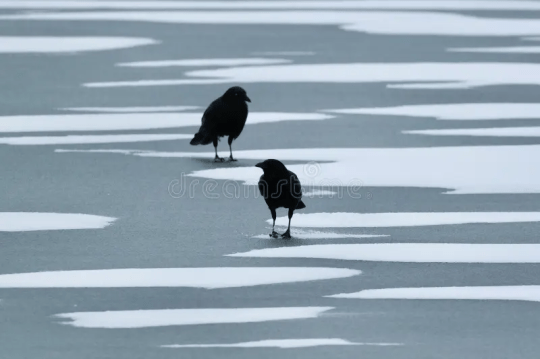
WESTON NOW SITTING ON A PINE SHELF

a short story from CONVERSATIONS WITH A HYPOXIC DOG (A review is coming soon to BOOKS)

The clutter of the office made her uneasy. She wished to straighten and dust. The books were all in disarray. He had forbidden her to touch anything. This wasn’t the house, though live here he did. His life at the university. She rarely visited the place.

He had pushed books and papers aside to open the slender volume of black and white photographs. Simple it was; yet elegant. Just as the photographs were. He had decided at last to bring them hom

“They don’t say anything,” she said.

“Listen harder.”

“O cute. There’s no context here. Just pictures.”

“Photographs. Context all inclusive.”

“What? Like paintings?”

“Yes.”

“Abstracts, smear of paint and an onion skin. That sort of thing?”

“Yes.”

“They don’t say anything either. The nudes like the morgue on TV. They make me shiver.”

“Corpses?”

“Look at this one.”

They looked. The silence grew slowly palpable. She fidgeted at the buttons of her blouse. Her frazzled auburn hair framed a pale face, green eyes. An image of some prepubescent fat girl surreptitiously picking at her wedged underwear made him smile. He shifted his weight away from her. His hands found the pockets of his coat.

“Is it erotic? Do you think? Men see things different.”

She over bit her bottom lip and tilted her head towards him. Her hand touched his arm.

“She’s a little fat. Do I look like that? What do you think? Is she sexy?”

“Umm. If you want it to be.”

“That’s no answer.”

“Well, it’s not about sex. Not in the conventional sense.”

“Everything’s about sex. Or money. So nudes sell. Western makes money. That it?”

“Weston.”

“Whatever.”

“No.”

“No what?”

“It’s not about money.”

“I give up. What is it about?”

“Who’s on first.”

“What?”

“Nope. He’s on second.”

“Who’s on second?”

“Nope. Who’s on first.”

“Well, who is?”

“Exactly.”

He was laughing then and shaking his head. She turned to face him, and slapped him open handed on the shoulder.

“Aren’t we the superior one.”

“Come on, let’s get coffee. I’ll tell you a story about a dead squirrel.”

Past the window of Martinotti’s pedestrians passed looking in, the quick glance, looking away. He had waved to Jimmy as they entered and held up two fingers. They sat at a small square oak table near the front window amidst the clutter of the old delicatessen. The disarray provided ample distraction, and he always felt somehow invisible beside the wine crates and cheeses, the shelves of pasta, hanging garlic, odd groups of dishware, pots and pans, mishmash of tables, chairs and benches each with its newspaper, magazine or book, and the erratic hum and rumble of the heavy old coolers along the back wall.

“The place hasn’t changed much.” She had not been there since the summer. “Your classroom.” The woman sat and looked. He had taken the chair facing the window. “That girl was here with the others. What was her name? You told me once.”

“Celia,” he said.

“Celia. Odd name. I don’t like it much.”

Sunday morning. Gray skies. Drizzle. An old couple, each with salt and pepper hair, his in a pony tail, hers free down her back, sat at a round wooden table painted bright red. Their chairs were green. They sat together and sipped espresso from white demitasses. Animated conversation draped them with a confessional anonymity. He leaned in to her; he spoke; they laughed out loud together.

Envy turned him away from them. Many of the pedestrians walked past hooded and huddled. Young faces.  Many students in this district. Old buildings. There the Hotel Joyce. The rooms above the fish house. Rent by the hour, the day. Who would stay there longer? No one went to the Hotel Joyce for the view.

Jimmy arrived with their espresso. “How goes the war, my Professor?” he said, a hand deliberately placed on the man’s shoulder. A nod to the woman. “Mrs. Professor,” he said.

“No doubt we are overrun,” said the man.

“We are forced to live in our heads.”

The man nodding. “E il Patrone? How is your father, Jimmy?”

Jimmy put a hand to his ear and fingered the studded lobe. “Without Mama …” He shrugged.

“My condolences.”

Another touch of the shoulder. “Enjoy.”

The woman watched him walk away. She said, “How do you tolerate that queer?”

They sat in silence. She looked out the window. The old couple at the red table spoke now in Italian. The man had lit a cigar; a rich and redolent odor diffused. He then had suggested that the size of his cigar was not equal to the business proposed. The woman had murmured her response, and the old man had snorted his laughter.

Sipping the last of his coffee, he considered his wife.

Still turned away, she said, “So what has this Celia to do with a dead squirrel?”

“More coffee?”

“Tell me the story.”

“All right.”

They had come from the art museum. His student. His friend. A brilliant young woman. He was perhaps bewitched. Something in her left profile, an elegant line, and the delft blue of her eyes. Self-contained, yet mischievous. A boon companion never far from laughter. Yet her silences begged questions.

Teacher, student.

But student, teacher as well.

Of late, it seemed, both students.

And, of course, both teachers too.

From the museum that day they had come upon the Hotel Joyce. The allusion became in a moment the antidote for his illusions. He gave in gladly to tomfoolery.

Celia had said, “You wouldn’t dare.”

He had taken her by the hand and quickly through the door of the Hotel Joyce. The officious clerk looked on as bland as he was blank. Clean-shaven, younger than he should be, well spoken. Sitting on a stool behind a glass cage in a narrow, unkempt lobby.

“Good afternoon,” he said. “May I help you?”

Student leaps into hesitancy of Teacher’s sudden discomfiture.

Celia said, “My uncle and I need a room for the afternoon.”

Up the stairwell, co-conspirators, the laughter bursting from them. The key in the lock. After you, Gaston. But no, I insist. To a shabby disappointment. Smells dominated. Disinfectant. Mold. Cigarettes smoldering. The view of window and brick. Better to pull the shade. They sat somberly on the bed and inventoried the furnishings.

Threadbare carpet. Grayish. Frazzled. Stained. Clearly beyond redemption. Celia insisted on blood stained. Melodramatic, he replied. Frankie and Johnny, she said.

A nightstand thickly painted something brownish over greenish over sortawhitish. The color of sewage.

A lamp. The shade appeared to have a bite out of its lower end. They could not agree on this.

A chair. Against the far wall. But not so far in this small, narrow room. The chair painted to match the nightstand.

A painting, above the chair. Of flowers. Cut, arranged by chance in a vase of brilliant blue.

Off white walls. Water stained in that outside corner. Patched and not textured there on the hallway wall.

“Nice vase,” he said.

A shrug and tilt of head from her. Perhaps a smile.

They sat together on the bed and bounced to hear the springs creak and groan. They sat still.

“We’re not seeing what’s here,” Celia said.

“Not seeing a bathroom. Probably down the hall. European model.”

“No, listen. We’re making judgments. We’re abstracting the room.”

She sat to his right looking at the chair, the painting, the window. She studied the bare threads.

“Do you remember the squirrels,” she asked.

He smiled. “Oh yes,” he said.  Student takes teacher for a roller coaster ride, he thought.

“We were talking about love,” she said.

“We were on a run. We had broached a concept. I plead hypoxia.”

She hadn’t heard. “No, I had asked you about …”

“Medicating neuroses,” he said into her reluctance.

Her head nodded assent.

“Depression, for example,” he said.

She sat still.

He said to her, “A last resort, we agreed.”

“And you talked about simply waiting with the certain knowledge that things would change. Today it is raining. Tomorrow the sun shines. Yes? Something like?”

Springs squeaked, nearly a drunk’s hiccup, as she turned to him.

“Yes,” he said. “And then I boldly went on to suggest that love was an able antidote as well. Or could be. It requires mutuality.”

“‘Mutuality engenders beatification.’ Your phrase.”

Laughing. “Quiz on Tuesday,” he said.

“But we left love sort of … hanging?”

“Yes.”

“Who’s on first.”

“Yes. Perhaps that kind of ambiguity.”

“About love?”

“Yes.”

She looked past him out the window. “And then the two squirrels darted across the road in front of that van.”

He stood up and paced the room, across and back again. Standing at the window, through the geometry of the buildings a glint of sun from the distant river and just there the gentle arch of the bridge span.

“One ran quickly across,” she said. “The other …”

“Chasing la femme, his heart’s desire. Caught in the maelstrom. Froze and got tumbled end to end.”

“Yes,” she said. “But when the car passed, off again was our friend, the squirrel.”

He turned and grinned. “And as quickly as that, you tumbled my abstraction. You said …”

“‘That’s what love will get you.’” Her arms extended, smiling broadly; her hands turned elegantly up and open. “Ta da.”

Laughing then together. He took her hand and led her foot thumping down the stairwell to wave and grin stupidly at the officious clerk who, bless his soul, tipped a finger from his forehead. Perhaps he smiled.

She had been infectious.

Now the scrape of chairs. The old couple standing at their table. He helped her with the sleeve of her coat. She fixed his collar. A fellow wrapped in a tattered overcoat shuffled past the window. Einstein’s hair. Meaty Irish face.

“But …” She fiddled with her cup, turned the saucer. She centered the salt and pepper. Arranged a napkin. “You said dead squirrel. But the squirrel didn’t die.”

He watched the older couple through the door, watched as they passed before the window and then gone.

“That’s true.”

She waited.

He briefly smiled.

“You’re not saying anything.”

“Not much to say.”

“Well, professor, you are too obtuse today.” A coy smile.

He shrugged.

“You tell me that silly story and now expect me to understand these pictures.” She stared at him.

“Photographs.”

The woman blinked dramatically. Her lips met and then curled slightly in to a nip of teeth, her hands suddenly still.

“I’m sorry,” he said. “That was pedantic.” He put his hands on the table, drummed fingers lightly.

“Pedantic,” she mimicked.

“It’s like explaining a joke.”

“Try me.”

“Fuse the abstract with the concrete and a light illuminates the darkness. There’s more to a stone than hardness.”

“Hardness.”

“It’s what Hemingway did with his stories. It’s what Eliot did with his poetry. It’s what Weston did with his photographs. It’s what Celia had begun to do with hers.”

Her eyes narrowed. “That was her book.”

“Celia? Yes.”

“But it’s … it’s … that’s the one you gave to her.”

“Yes.”

“And she gave it back?”

“Yes.”

She sat back in her chair. Her head nodded slowly. “I remember now. She went off to … to …”

“Italy.”

Suddenly leaning in, she snapped, “You gave her that money.”

He looked back.

She turned away from him and looked out the window. Recrossed her legs.

The painted sign on the building’s back wall for The Hotel Joyce, the fish house below, faded and drab with time.

Angrily back, loudly, “Did you sleep with her too?”

He pushed his chair back abruptly and stood.

“No, don’t,” taking his arm. “I’m sorry. Don’t go.”

They sat in silence. He took their small cups to the counter at the back of the store. Jimmy ran both hands over his head flattening blond spikes.

“Another dose?” Jimmy asked.

“Yes.”

He moved slowly back through the cluttered room. The aroma of the cigar lingered. The faint scent of the woman. Coffee ever present. Dust motes in the window light.

He sat.

She looked to the window and back again. “Espresso,” she said. She looked at the man. “O why can’t you just be football and beer?”

Rain fell.

Tomorrow, sun.