EMPTY HEAD, OPEN HAND

Begin with a ubiquitous story of tea: The professor visited the master to test his understanding of zen. The Master offered tea. As the tea steeped, cups were placed. The professor went on explaining his visit, explaining zen, explaining Buddhism and its import in Japanese life. The master lifted the pot and leaned to pour tea for the professor. As the cup filled, the professor became quiet. As tea began to run over the table and onto the tatami, the professor could no longer contain himself. Stop, he cried. Stop, it’s full, it’s full. The master withdrew the pot, setting it carefully onto a trivet. Just so, he said. 
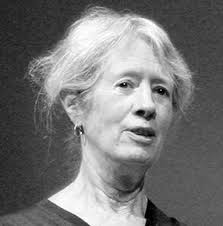
Lyn Hejinian (1941 – 2024)

The brain of a human contains 86 billion nerve cells. Unlike a tin pail filled with water, sensations, perceptions, conceptions will never ‘fill’ the brain. Consider the man, like the professor, who is full of himself. The metaphor describes a person who has an exaggerated notion of self worth. Egocentricity is his stock and trade.  

Empty headed is another metaphor used to indicate a person who does not think before he acts and so often behaves impulsively and mistakenly. The metaphor often suggests an unintelligent person, though behavior is not necessarily related to intelligence. 

Many 19th century psychologists subscribed to Sherlock Holmes’ notion that the brain was a vessel whose volume was finite so best not to clutter it with nonsense.  

The cup of tea suggests the metaphor rather than the physical fact; and the professor might be described as empty headed despite his discourse. 

The master might also smile at the notion described above of empty headed. He would no doubt say that an empty head is just the thing. One cannot add to a full head. The metaphor has morphed from an impulsive person who acts without thinking to an intuitive person who acts without thinking. 

Consider poetry. E. E. Cummings, perhaps, a good place to start, a poem titled Since feeling is First: 

since feeling is first both 

who pays any attention 

to the syntax of things 

will never wholly kiss you; 

wholly to be a fool 

while Spring is in the world 

my blood approves, 

and kisses are a better fate 

than wisdom 

lady i swear by all flowers. Don’t cry 

– the best gesture of my brain is less than 

your eyelids’ flutter which says 

we are for each other; then 

laugh, leaning back in my arms 

for life’s not a paragraph 

And death i think is no parenthesis 

This is not, obviously, a Shakespearian sonnet. This is: 

Shall I compare thee to a summer’s day?  

Thou art more lovely and more temperate.  

Rough winds do shake the darling buds of May,  

And summer’s lease hath all too short a date. 

Consider: The dog ate the car. Though syntax and grammar are correct, diction has led us astray. Though understandable, the words make no sense. The reader might even feel somewhat used: the brain reads ‘cat,’ does a double take and so reads ‘car.’ 

If we write: the dog eating the car left spilt milk on the kitchen stool pigeons flying overhead; and then change the shape of the line to: 

the dog eating the car 

left spilt milk on the 

tumbled stool 

pigeons flying overhead 

What results is jumbled syntax and an open ended poem (of sorts) that invites (or perhaps repels) the reader into the process rather than closing him or her, as the case may be, out (slam). 

Shakespeare’s sonnet does not invite comment about form or grammar or syntax or diction. One may reflect, but the poem is a closed book. 

Poet, essayist, and educator Lyn Hejinian became the leading figure of the Language poetry movement of the 1970s which supported experimental and avant-garde poetics. She became more concerned with the specific issue of openess in both language and life after the death of her daughter-in-law at a young age. She rejected the notion of closure and thought that inclusion and acceptance (the open hand) were imperative to facing both the travails of daily life and writing words. 

In her essay ‘The Rejection of Closure,’ she writes: The ‘open text’ is open to the world and particularly to the reader. It invites participation, rejects the authority of the writer over the reader and thus, by analogy, the authority implicit in other (social, economic, cultural) hierarchies.

The open hand and the empty head are not two things. 

SIMPLE ELEGANCE

Poetry is not everybody’s cup of tea. Nobel laureates Joseph Brodsky, Derek Walcott, and Seamus Heaney (friends, they were—ah, to be a fly on the wall when those three got together) suggest that literature in general and poetry in particular are the best tools for prying open the closed mind.

To acquire a taste for poetry is less difficult if the poems are neither lengthy nor too complex. Hamlet, despite Shakespeare’s reputation, might put one off. Many poems by Robert Frost might serve though it could be argued that he lacks elegance. 

The cup pictured above is both simple and elegant. Many kayaks possess the same qualities. Classical guitars are relatively simple and certainly elegant. Simplicity is the quality of being plain or natural. Elegance, in this sense, is the quality of gracefulness and, perhaps, ingenuity.

Haiku are simple poems of seventeen Japanese syllables. With their origin some 800 years ago, they began as humorous and sometimes ribald forms of expression for Japanese wits much like the limerick in English. There was a young man from Boston who used to drive an Austin … That sort of business.

In the 17th century Matsuo Bashō changed all that. He was an inveterate traveler, walking many miles throughout Japan. His most famous composition is The Narrow Road To The Deep North. This book and his other travel journals were not only examinations of famous places in Japanese history, but also deep probes into his own psyche. His writing combined prose and poetry and both formal and informal themes.

Sleeping in a stall—fleas, lice, horse pissing nearby

Poems such as these are accessible and a good place to begin acquiring a taste for words so arranged. What elevated Bashō from both his contemporaries and his predecessors was his ability to select just the right word that captured a moment in his travels, but also offered insight and reflection. So, while his poetry may be an ideal place to begin, there seems to be no end to the consideration one might give to his words.

Breaking the silence of an ancient pond, a frog jumps into water—a deep resonance

Connoisseurs have spent lifetimes on those few words. The reason lies in the nature of the Japanese language. The initial suggestion was to begin with Japanese haiku. Even in translation, these poems offer more for the reader than do haiku in English or other languages. 

The penchant for rendering English haiku in three lines of five, seven, and five syllables is strictly an affectation. Bashō wrote his poems in one line that was either horizontal or vertical. Translations of Japanese haiku, older verses especially, are often given with the original kanji included. Kanji are the Chinese characters the Japanese adopted for their written language. This provides an opportunity for the reader to explore another dimension of the poems.

Kanji are simply picture words, miniature works of art. Anyone who enjoys jigsaw puzzles will have no problem deciphering kanji. A literal translation is not difficult to come by. Deciding on a more figurative rendering becomes something to ponder. Consider the title of Bashō’s most famous work:

Oku no Hosomichi

Pronunciation is straightforward. The vowels and consonant are much like Italian. Unlike English, there are no stressed syllables. The repetitive ‘o’ sound in the title is intentional; and this, of course, is lost in translation.

Nobuyuki Yuasa, whose rendering of the work has become a classic, suggests: Narrow Road to the Deep North

Others prefer Journey to the Interior. Literally, ‘oku’ means interior, ‘no’ gives to, and ‘hosomichi’ narrow road or path. The key point is contained in the word ‘oku.’ The notion of ‘interior,’ given the nature of Bashō’s intent, seems essential to any credible translation.

Nobuyuki is known for his figurative translations. Jane Reichhold, author of Bashō, The Complete Haiku, is more literal. Shades of meaning and depth of understanding are what are at stake.

Bashō’s so called ‘death poem,’ recited to his disciples, was translated by Reichold as:

ill on a journey

dreams in a withered field

wander around

My translation:

Sick on my journey,  dreams wander the withered  field

旅に病んで 夢は枯野を かけ
tabi ni yande/ yume wa kareno wo/ kakemeguru

The character above translates (see jisho.org) as ‘go around,’ ‘revolve’ and so becomes ‘wander.’ Japanese verbs, like German, come at the end of the sentence. Kakemeguru currently means ‘to rush about.’ For Bashō, in 1689, the word meant ‘to drift’ or ‘amble.’ Wander is sufficient and offers the alliteration with withered.

As Emerson suggested and others have seconded, art is all in the details. And once one is immersed in such minutiae as rhyme, alliteration, cutting words, season words, let alone meaning, one tends to leave one’s ego nestled quietly within the grey matter of one’s frontal lobe.

Information on Basho, The Complete Poems and The Narrow Road To The Deep North can be found in BOOKS.