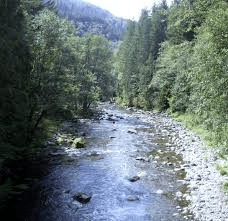
We are sitting on the rocks by the river waiting and watching as three ospreys circle overhead, hunting. The snow in the mountains has gone with the latest batch of hot weather; the river is low and, to our eyes, fish are scarce. What the ospreys see is, of course, something else again. Our vision is quite good. Some biologists think that our large brain became necessary to process all the perceptions our eyes (and other senses) take in, that our brain size has evolved more specifically with our visual acuity. Ospreys, apparently, can see twice as well as humans. However, that generalization does not tell the whole story: Osprey have the largest eyes relative to size of any animal; they have four color receptors to our three and can see ultraviolet light; their visual acuity due to a denser number of receptors is much better than ours; they can perceive the refractive index and so adjust their angle of vision to see beneath water’s surface; and ospreys can perceive magnetic fields to aid in navigation. Just how they process all this information is unknown and, arguably, unknowable.
Humans, according to a Caltech paper, think at a rate of 10 bits (binary digits) per second. However, our bodies’ sensory systems gather data about our environments at a rate of a billion bits per second, which is 100 million times faster than our thought processes. We are slow thinkers; and often cannot see the forest for the trees.
In 1890, concerning the notions of perception, conceptualization and, in turn, sagacity, William James wrote:
All our knowledge at first is vague. When we say that a thing is vague, we mean that it has no subdivisions ab intra , nor precise limitations ab extra ; but still all the forms of thought may apply to it. It may have unity, reality, externality, extent, and what not — thinghood , in a word, but [p. 344] thinghood only as a whole. In this vague way, probably, does the room appear to the babe who first begins to be conscious of it as something other than his moving nurse. It has no subdivisions in his mind, unless, perhaps, the window is able to attract his separate notice. In this vague way, certainly, does every entirely new experience appear to the adult. A library, a museum, a machine-shop, are mere confused wholes to the uninstructed, but the machinist, the antiquary, and the bookworm perhaps hardly notice the whole at all, so eager are they to pounce upon the details. Familiarity has in them bred discrimination. Such vague terms as ‘grass,’ ‘mould,’ and ‘meat’ do not exist for the botanist or the anatomist. They know too much about grasses, moulds, and muscles. A certain person said to Charles Kingsley, who was showing him the dissection of a caterpillar, with its exquisite viscera, “Why, thought it was nothing but skin and squash!” A layman present at a shipwreck, a battle, or a fire is helpless. Discrimination has been so little awakened in him by experience that his consciousness leaves no single point of the complex situation accented aud [sic] standing out for him to begin to act upon. But the sailor, the fireman, and the general know directly at what corner to take up the business. They ‘see into the situation –that is, they analyze it — with their first glance. It is full of delicately differenced ingredients which their education has little by little brought to their consciousness, but of which the novice gains no clear idea.
He, of course, had a good deal more to say, as he always did, but that should suffice. He did put humans at the top of the list for sagacity. Brutes occupied the lower reaches. I beg to differ. I suggest that our vaunted ability to think and reason and speak is less a blessing and more a curse. The current state of the planet makes, I think, a good argument for this position.
Homo sapiens? Guess again.
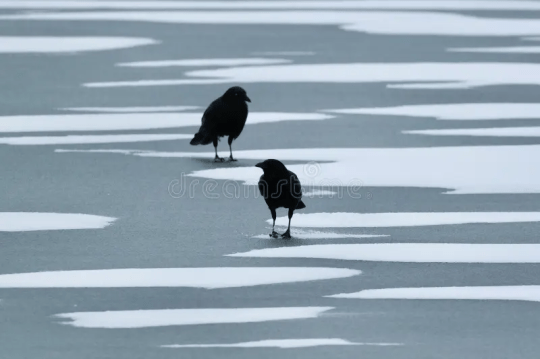
If James’ opinion of ‘brutes’ is flawed, questions arise: Just how perceptive are brutes? And what exactly did he have in mind with that word? Whales perhaps? Or wolves? Or ravens; and how well do they communicate? how well are they integrated into their environments? Amphibians have existed for over 300 million years. Clever little devils. And just how intelligent might an osprey be? Are they, too, slow thinkers? Their hunts are successful only 25% of the time. Does this suggest a sluggish intellect? If pushed to an opinion, I would guess that all wild creatures perceive and process more efficiently than do humans. No living organism that I know of is at odds with its environment except human beings. The wonder might be that ospreys (and other wild creatures) survive as well as they do.
The birds seemed to have called it a day or merely have left the Salmon River for the nearby Sandy River. The Sandy is a bigger affair with more opportunities for a meal. All they need is several small fish or one larger one and they are replete (400 grams, it is thought). Perhaps the heat has sent them back to the nest. Are birds affected by heat? Birds are warm blooded and can regulate heat, so perhaps they have gone off to sit on a high limb in the shade. Whatever the case, even though they don’t stay long. It is always nice of them to drop by.
The sky is made a better place for the clear, sharp whistle calls of the fish hawks.
The temperature has reached 91° in the shade and it is not yet noon. Though the birds have abandoned the hunt, I am loath to leave the river. The wife has gone on to the post office and I’ll wait for her return. A dipper flits past, lands on a rock downstream and dives for a morsel. Of course, it may just be taking a quick dip to cool down. Robins, thrushes, jays all do the same. Our ponds are popular for bathing as well as drinking. Birds do seem to pant, but it is a different operation than how a dog pants. Birds can flutter their throat and cool in this manner.
I have worked up a sweat walking the quarter mile back to the house. No mail today. The wife has left me to check on a friend. Coming up our driveway, I take in the house. Two sides of the house are painted; the rest will have to wait for a break in the weather. Paint was drying on the brush faster than it could be applied. My wife, ever persistent, worked through two mornings and one early afternoon to get half the job done.
I am concentrating on sanding and restaining our decks. The sanding does not begin until 9 AM out of consideration for the neighbors (and the hope that they will reciprocate). A two hour window in the morning cool has got me a quarter of the way through the job. Sitting by the river seemed a better occupation this morning, so I let the decks be.
A tomato and onion sandwich with a dab of Dijon mustard filled my belly, and a glass of ice tea and orange juice quenched my thirst. During lunch I listened to a few songs from Watchhouse and reflected on an interview with Emily Frantz and Andrew Marlin that I had seen recently. Our perceptions always affect us on some personal level. Often we bite our tongues rather than speak and expose ourselves. Andrew, one of the best singer songwriters on the planet, was concerned about the rather personal nature of many of the songs on their new album. Then it occurred to him that everyone hears the song differently, and everyone makes it personal for themselves. The more empathy involved the closer one might come to someone else’s personal insights and emotions. But they then become our own, and the songs more often expose the listener’s emotions rather than the singer’s.
Many ‘brutes’ affect us the same way as do songs. Dogs and horses both have strong affinities with humans. Can we empathize with other critters? Those who work with animals would no doubt answer in the affirmative. Jane Goodall, for example, must have had some feeling and understanding for her apes. And Roger Payne must have felt privileged listening to and interacting with his whales.
Our friends know that they are welcome to drop by anytime, and many do. Most think there is a certain magic about our little piece of ground. We think it is simply a spirit of inclusion that we bring to the place. Spiders, newts, snakes, squirrels, ravens, skinks, raccoons, the odd black bear and the occasional osprey are all welcome. More directly, my wife and I have shared the place with over a dozen canine friends, mostly collies. An assorted group of cats also have roamed the place. And, not least in importance, we are surrounded by firs and cedars, a few hemlocks, some maples, cottonwoods and alders.
Brute has come to mean a savage and violent person or animal. For James in the 19th century, the word was more simply defined as an animal as opposed to a human being, an animal specifically lacking in intelligence. If we removed our opposition, we might all be considered brutes. When all is done and dusted, we are all animals, all part of the natural world, all interdependent.
Familiarity will breed discrimination, not for segregating, but for understanding; and with understanding comes both empathy and, most importantly, inclusion.

Thoth Hermes Trismegistus was, for the Egyptians, the god of wisdom, letters, and time. He had the body of a man and head of an ibis.
William James, Principles of Psychology, Vol. II; Dover Publications, New York.1890, p343.
 majikwoid