THE HELMET OF MAMBRINO

This story begins here, in the middle, if in fact it is a story at all, if in fact one can call the middle of something its beginning, if in fact I am not talking through my hat. Stories more often than not are chronological. A plot line threads its way through the weft, the background, over and under becoming part of the warp, the events that make up the narrative. Narratives are connected by characters as well, although characters come and go, as life will have it. Dialogue, too, provides threads that capture their conversations, their thoughts, their feelings. And description tints the weft to add a visual element to the piece. Stories, of course, are fictional; they may be true, but the truth is usually stretched quite thin with the telling. Essays are factual. That is the expectation, though many are not; for truth is not only malleable, but elusive as well. Error and mendacity often twist the truth so that the essay does not always say what is, but says, instead, what the writer wants you to believe or simply what the writer thinks is so. If poetics are applied to evoke mimesis and catharsis, an essay may become something more like a story and facts may become actual or figurative.

My friend, who was for thirty-five years an editor for the San Jose Mercury News, told me what I had here might be called a fictional essay. He scoffed when he said it, so nearly a sneer. There are such things these days, he said. All the lines are blurred. We were sitting on his porch, he and I, watching the river and drinking whisky.

Words on paper are prose or they’re poetry. No need to split hairs.

So he said.

His dog laid at his feet. A dusky brown with limpid brown eyes to match her heavy coat, the dog’s head was huge with a body to match. She looked, at first glance, quite intimidating; but subsequently, once she had determined your intent, she became quite friendly.

Frank had returned my first drafts littered with red and blue lines, the margins cluttered with notes and comments and many exclamation points. Once, in college, Oregon perhaps, or San Jose State, I sat beneath the withering gaze of a diminutive, grey haired woman, who perched on a straight backed chair and lambasted each one of the seven or eight students sitting apprehensively at a rectangular oak table for the many deficiencies  she had found in our initial essays. Composition 301 or somesuch class that I had taken as a lark and that had turned out to be purgatory at best.

Your sentences are too long. Diction is flabby. Say what you mean and be done with it. Frank, speaking frankly, tended to be irascible these days. He had said, Got the big C. Dead in six months. End of story. He poured whisky and we sat in silence listening to the river rush by below us, a spring freshet, his last apparently, boulders audibly rolling, that dull pronounced thud they have, woody debris carried along quickly, pillows of white water over large rocky obstructions, back eddies circling away from the main stream, a respite where broken limbs and cast off flotsam gathered.

I had been a slovenly young man both in my physical appearance and my intellectual proclivities. In retrospect, my grey haired hectoring tormentor who tyrannized the entire English department  and who became the bane of my existence, taught me all that was essential about putting words on paper, and like Frank’s dog, once she had determined your intent, became quite maternal.

“You are a Catholic boy,” she informed me during our first session together. She insisted on these ‘chats,’ as she called them, our one-on-one meetings, to provide access to each other’s intellect and emotions. “No progress comes when barriers are present.”

“I was,” I told her.

“There you are,” she said. “Change the tense of the verb, and the world turns upside down. And now you are what? agnostic? atheist?”

I hesitated.

Her glare, in that moment, stripped away all pretension.

“I don’t know,” I said.

“You are how old?”

“Nineteen.”

She lifted a delicate, translucent cup, sipped, and returned the cup to its dish.

Her office, a narrow rectangle, dominated by an oaken bookcase of such simplicity that it provoked immediate approbation, contained a worn maroon rug on the floor, a small trestle table for her desk, and two mandatory straight backed chairs. Two lamps provide a soft sufficient light. A smallish drawing that at first glance I took to be a heavyset man sitting in an armchair, turned out to be a portrait in brush and ink of a woman named Gertrude Stein, the sketch perched on the end wall of the room where one would expect a window. A cream colored paper, corners wrinkled, held by wooden push pins just below the drawing offered this sentiment: It’s up to brave hearts, sir, to be patient when things are going badly, as well as being happy when they’re going well. An improbable quote, it would seem, from Sancho Panza.

“Why are you here?”

Her question, direct, perplexing, felt like a blow. I could not hold her eyes.

“You must learn to think beyond the narrow confines of your skull, young man.”

My father had committed suicide; my mother had run off with the Fuller Brush man, a quip, a diffusion, not literally, and I had been adrift for a half dozen years awash in angst and uncertainty. I could not say these things to this woman, and, indeed, I did not. I said nothing. I stood, shook my head, and left her office.

“What’s her name?” Frank, as his illness progressed, spoke in truncated questions and declarative statements. From silence to perturbation, he spit out his queries and conditions.

I was grooming Stella, the comb extracting swathes of her coat in clumps of feathery browns and blacks, and the question coming as it seemed pulled from the air, or the grumble and splash of the river, unexpected and, seemingly out of context, begged an answer. What was whose name? Context eventually provided an answer, as we had been discussing, if that word is correct for the brief intermittent questions and answers we exchanged, my long past education.

“Bluebell Fulton you mean? The tartor of grammar, syntax, and diction?”

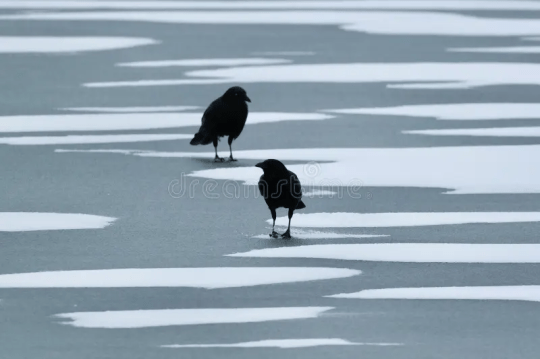
He turned his head away at a raven’s caw, poked a finger into the cold ashes of his pipe’s bowl, and then stared off across the river at the wooded slope beyond. Stella and I had walked to the swimming hole and back, and she had plunged in and swam circles, biting at the ripples she pushed out ahead of her. A good shaking and the warm rising sun dried her as we hiked the mile or so back to the cabin. I came most days ostensibly to walk Stella, but my intent of course, unmentioned and concealed, was to look after my recalcitrant old mentor despite his protests and apparent disgust.

“Wipe my ass for me.”

“If necessary.”

His daughter came three times a week, driving 200 miles round trip to do so, bringing soups and stews with onion and carrots and celery and mushrooms all chopped fine and bottled water which he ate and drank with difficulty and reluctance. She ignored his rebukes, swept the floors, washed dishes, dusted, kissed his cheek and left. I lived, at that time, just a few miles down river from Frank; and I timed my arrivals to coincide with Nadeen’s departures.

“How’s the head?” Frank’s query, not about the essay I was trying to write, but about an injury long past healing.

Months before, snow still covering the ground, I had fallen and hit my head while out with Stella.

“Good story, that,” he said. “Not front page though.”

The essay? I thought. Where’s he at?

 “Give it a 24 point hed, couple of columns.”

A bowl of tomato soup had skimmed over and his spoon and Saltine crackers sat untouched beside the bowl, the setting just as Nadeen had left it.

“Damn fool. Saved your ass. She did.” He slouched in his wheelchair and stroked Stella’s head. “Cracked his skull, he did.” He snorted to think of it, then said, “Whose story, the ass with the barber’s basin?” but  began to cough, the cough, now chronic, grated his throat, and he bent over clenched fists, rasping, choking gasps coming from the man until sobs broke the gradually diminished coughs and he spit into the small basin beside him.

Rising quickly I had brought a towel to his mouth, and encircled his shoulders with support, there being little else I could do. I had pushed the soup out of the reach of flailing arms. Stella had laid her head in his lap, her gentle whine, punctuating the raucous coughs.

He had paled, but managed to get his shoulders squared, sitting back in his chair.

“The jailbird, that Spaniard,” he said. “Rambling sentences longer than a dead man’s dream.”

Cervantes, he meant, whom he ridiculed but thought beyond reproach.

He still thought of me as I was when I wore a younger man’s clothes and had just begun learning a trade though twenty years had passed and I had three novels, a biography, and a collection of essays to my credit, a reputation of sorts, and enough sales to maintain a modest living which suited me. The concussion had not cracked my skull, fortunately; but Stella had saved my skin. The story remained unwritten though I had made several attempts all of which came to nothing. The perspective of thirty-five years finally brought out the words and phrases that had eluded me for so long.

Frank had begun to weaken and walking had become a burden, rising from a chair, lifting a foot up a step or two, climbing a hill, all efforts that taxed him beyond endurance, frustrating the man to distraction until he finally stopped trying. Stella became my charge, and I came daily to walk her regardless of weather.

The light snowfall, typical of the Cascades, had littered the hills with two or three inches of fairly dry snow. Overnight, clearing skies drew away any of the day’s warmth, and rime covered the rocks along the river. Instead of the waterhole, Stella and I had decided to take the fork that led across Old Maid Flats to the falls to see if they, too, had succumbed to falling temperatures and hardened to ice.

The shortcut across the flats wound its way through stately firs and massive rhododendrons; and, of course, was no shortcut at all, simply gave that illusion. By cutting the arc of the river trail which followed the ridge line with its many creek cuts and circuitous trail, one avoided the many ups and downs, and, as a bonus, had the mountain’s west side so prominent in the background.

When the story at last began to write itself—so it seemed, in my senescence, that once begun my stories and essays (how arbitrary the distinction would be if a distinction were to be made) literally wrote themselves— the necessary incidents and dialogues appeared as my fingers struck the keys and then in a trice the story was done.

Saska provoked the imagery. Smaller than Stella, Saska was that rare breed, a Sarplaninac, first bred in southern Yugoslavia of all places, and named for the Sar Mountains. She weighed something over 100 pounds and possessed enough strength to tow a plow through the lava field on which my house was built. For the past 14 or 15 years I had lived on a high broad saddle between the Big Island’s two massive volcanoes, Kilauea and Mauna Loa. Volcanic islands are not noted for their aquifers compounding the issue of water supplies. An abundance of rain provides a good source, but that necessitates a complicated storage and purification system, or so the government bureaucrats would have it. I had been preoccupied of late with the acidity of my water tank.  A phone call to the agency responsible for testing our water had me pacing my deck oblivious to time and the beauty of another day spiraling to a close, the sun drooped to the horizon, the colors diffused through the atmosphere in yellows and reds. It was well past Saska’s dinner time.

The creature barked once, which I ignored, rose from where she commonly laid in the shade of the umbrella plant, and came to my side, nudged, barked again, to which I said, No Saska, and the bureaucrat said indignantly, I beg your pardon, and I said … well, nevermind the ‘I said’ ‘he said’ and the rancor that quickly arose. The upshot was that he would review the test when time allowed, check that procedures had been properly followed, and call me in three or possibly four days’ time  with the results. As I turned to chastise my importunate beast, she took my wrist in her mouth ever so gently and commenced to drag me across the deck towards the kitchen and her dinner.

She weighed nearly as much as I did, I was 75 and somewhat frail, and resist as I might I was no match for the dog. She got her dinner. I got my story.

Stella had saved my life. To reach the fall’s trail across the flat one had to cross the Muddy Fork of the river. The Forest Service had erected a succession of bridges to accommodate the growing number of hikers, but each bridge failed to withstand the spring rains and snow melt that gave rise to floods that easily removed these bridges. Logs usually remained in place throughout the year to cross dry shod, and it was across one such that I tentatively made my way. Vertigo took hold halfway across, and I thought it prudent to straddle the log as best I could and scoot across, but could not bring myself to adopt such an undignified position. I tottered on until the inevitable happened. Off I went, a short fall, five or six feet, but into the icy cold stream with its rock strewn bottom. My shoulder struck in such a fashion that my clavicle snapped and my head in turn struck a rock hard enough to render me unconscious. I regained my senses, aware that I was being dragged up the bank and clear of the river by Stella who, once getting me clear, hovered over me whining and licking the wound on my forehead.`

We huddled together. I slowly became sensible, and ran various scenarios through my head to find a solution to this little contretemps. Clutching Stella with my good arm, her warmth and comforting presence revived me sufficiently to begin my evacuation. My belt, with some difficulty, was removed from its loops and used to strap my useless left arm to my side, teeth providing a grasp unavailable otherwise. I cinched the belt as tight as I could manage, pulling my shoulders back and aligning the cracked bones of my clavicle. My bandanna served as a sling. Leaning on Stella, grasping her collar, I stood, closing my eyes, breathing deeply against the initial dizziness, and began to follow our footsteps back to Frank’s cabin. 

Hypothermia proceeds ineluctably by stages. As one’s core temperature drops, shivering begins. This shivering is the body warning of impending doom. When shivering stops, insensibility follows. Consciousness, always a dodgy business, becomes impaired. Climbers beset with such a condition inevitably feel overheated, fooled as they are by insensible signs. They remove gloves and hoods and caps and parkas and freeze to death all the quicker. Death seems inevitable, yet many cases have been reported of this death held at bay and the victim brought back to life.

I shivered. I groaned with the pain of my broken bone. Plodding on, my feeble brain focused solely on staying upright and taking the next step as Stella pulled me along. We arrived. Frank was asleep in his chair, and I slumped as quietly as possible to the floor by the fire. Stella stretched and shook and laid beside me. The cell phone sat on the end table well out of my reach, but at hand for Frank. I would have to make my way some ten feet to retrieve the phone. That task seemed beyond my resources. Clutching Stella’s ruff, the fire in the wood stove burning brightly, my head throbbing, I concluded that I would simply sit and die where I sat, that I deserved no better fate, that intelligence was no match for the perfidy of one’s perceptions and subsequent conceptions. Couldn’t think my way out of a goddamn closet. The phone may just as well have been in Turkestan.

William James brought me to my senses. Or rather, thinking suddenly of the man’s thoughts on the subject of sense perception, entire paragraphs came to mind.

Thought alone can unlock the riddle of space, and that thought is an adorable but unfathomable mystery.

Thought alone unlocks perception, and conception is an unfathomable mystery.

Between normal perception and illusion we have seen that there is no break, the process being identically the same in both.

An engaging speaker, affable, knowledgeable, mellifluous, his voice at once both melodious and clear, a tenor, soft spoken, but easily heard.

Man lives in only one small room of the enormous house of his consciousness.

I gathered my knees beneath me, my consciousness focused completely on that movement, the precise position to hold my left arm, the support I needed from my right hand, and went on hand and knees slowly and carefully to the table. Sitting back on my heels, I breathed for a bit, just breathing in and breathing out. Reaching for the phone. Using my thumb to push each numeral. Dialing 9-1-1.

And waited.

Frank softly snored.

Stella rose up, stretched fore and aft, then went to her water bowl and drank.

This story began somewhere near its middle with Frank alive but not well and Stella realizing that her future was with me. If in fact it is a story at all. I seem to have called it an essay at one point.

“You shoulda had a hard hat. And wings,” snorted Frank, raising a fist up and then gently down on the arm of his chair. An exclamation point.

And so I am here back where I started, an old man with missing teeth, and soiled trousers, patched shirt, and a mind to match. Stories, of course, are fictional; they may be true, but the truth is usually stretched quite thin with the telling. Essays are factual. That is the expectation, though many are not; for truth is not only malleable, but elusive as well. Error and mendacity often twist the truth so that the essay does not always say what is, but says, instead, what the writer wants you to believe or simply what the writer thinks is so. If poetics are applied to evoke mimesis and catharsis, an essay may become something more like a story and facts may become actual or figurative.

Nothing but the facts here, ma’am. Mimesis there is, but catharsis is up to the reader.

Saska no doubt will outlive me.

Sadness resides in all relationships.

Frank cast upon the waters of his river; Stella as well.

All things come and go as life will have it.

Ineluctably.

Inevitably.

Gone.

Saska trotted out to the deck, staring down the drive, and barked.
Twenty One

The following prose poem is from my book PLUM BLOSSOMS, an 81 poem narrative about the peregrinations through Japan of the banished Zen monk Master Ko

a path through woods banked in drifts, glazed, up the hillside as the snow covered red tile roof comes and goes, skewed by green snow laden limbs

with the dim light of the back dock leading them on

stomping feet up shoveled steps,

dog barks and a portly balding man says well well well, so you have come back

so i have, says master ko

i do beg your pardon, sir, i spoke to the dog

yet here i am, says master ko, and you, too, professor, here you are

dog barks up at one and again at the other

you have me at a disadvantage, says the professor

many students, one professor, says master ko

ah, so it is

you have exchanged the lecture hall for the refectory, philosophy for recipes

so i have, so i have; less, i find, is more, nothingness is the kernel of the infinite

dog nudges master ko’s hand, but the abstruse remains

a look, then: so who is this fellow, dawg, that you have brought to my door, asks the professor, and invites them in for oatmeal and eggs

and so,  as the morning wears, in come women, sprightly or stooped,  who pad quietly in to eat and go

with rosy cheeked children well in tow

and old men with knobby red knuckles and broken nails, the frail veined hands cradling

chipped cups large and small of blue and black and red and yellow while

fuzzy headed novices scurry about swabbing tables and sweeping floors

oatmeal and eggs and white plastic spoons with

the lopeared mongrel asleep in the pantry, muzzle upon 

his crisscrossed paws

ladling thick cooked oats into offered bowls

gapped tooth grin

belly full

slapping a knee

The Blindman

This story is an exceprt from my novel THE ILLUSION OF PLURALS (2002).

The trail up to the snowfield, the snowfield itself, even that last steeper section through the Watercourse would pose no difficulty. A plod, thought Murchison. He walked up a shallow grade along a side hill above a creek. The trail followed this creek for several miles through a dense, mixed stand of fir and cedar trees. The chafe of the pack straps and the jar of his footfalls occupied Murchison. Dougal trotted easily ahead of the man. Robins whistled; jays shrieked. On the steeper pitches, the creek rippled and murmured; the clear, cold water coursed over gray and brown and red rounded stone.

Stiff with the hike in and the nights out, Murchison adjusted the straps of his pack over the bulk of his parka and pulled his wool cap down over his ears. One step followed another; one step, then another and another and another, working into a rhythm, one foot after another. He envied the dog’s easy trot.

This is how it’s done, Murchison thought. You just plod along. Anyone could do it. Endurance. That’s all it took to climb most mountains. All you need to be is perverse.  Obstinate. “Hey, dog,” the man called. “Don’t look so happy with this business. Mangy crut.” Having a swell time, he is. A swell time.

The dog slowed and turned, tongue hanging from the side of his muzzle, looking back at the man, then loping away again, wolf trot.

As the man zigzagged upwards, he left the creek behind. The trees thinned becoming stunted and bent, wind swept, one side nearly bare; and Murchison felt the sting of a sudden gust. The rain had stopped, but the sky promised storm. An oatmeal sky, Murchison thought. Claire’s line. Another gust ruffled the dog’s coat. The cloud thickened, and the dog would appear and disappear and appear again. A wide spaced row of short, gnarled firs marked timberline. The man could distinguish nothing more above him. There was the dog’s shape, coming and going, and a persistent, chilling overcast.

Wind from the southwest, Murchison thought, feeling the cold on the right side of his face. Gusty up here. From this spot, he remembered, was a fine view of the summit of Grants. On a clear day. And off there somewhere, the northwest buttress. Mist swirled, condensed in the cold air, freezing; and he heard now the distinct crunch of the snow with each step. Above him, he heard the dog’s muffled bark.

“I’m coming, mutt,” the man called out. “I’m coming.”

Perverse and stupid. That pair. And, yes, dog, I’m still coming.

Dougal came back at a run, suddenly appearing, barking, turning, spinning about only to run off up the snow slope. Through the light, wet snowfall, Murchison could see the dog rolling in loose drifted snow, nuzzling and nipping at the furrows he made using his muzzle as a plow. Patches of old snow, gray and gritty with pumice dust, still lay exposed on wind blown slopes; the flats and hollows were white with new snow.

“First stop,” Murchison said. MacKenzie Snowfield. The Blindman.

Pulling an arm from a strap, he swung his pack off and down. This knapsack he carried now weighed no more than fifteen pounds with just the essentials. He had left his bigger frame pack hanging from a tree at the lake.

Seems heavier, he thought. This little pack. Too heavy. Too soon.

The dog rolled and  nipped at the snow, snarling, barking, stopping to look at the man.

“It’s break time,” he said to the dog. “And time to put on the rain gear. And dig out my moth eaten balaclava.” Gloves. Won’t do to get soaked through. Hypothermia, killer of the unprepared. Where had he read that? Some Forest Service handout, he thought.

“I’m gearing up, dog. You’re on your own.”

Lucky beasts, he thought. No problem with vasoconstriction. No frostbite. Little chance of hypothermia either. And no doubts. None. Not one. The best part, probably. No doubts.

“Any second thoughts, dog? Is this weather to your liking? A lovely day.” Lovely.

The dog chewed at the snow balled between his toes.

“We’re a little behind schedule, Dougal,” Murchison said. “You’re going to have to step up the pace  a bit if you expect to have any chance at the summit. Cut out this lollygagging. I’ll tell you though, boy, this mountain in this weather is no place for errors of judgment. You understand me, dog? Let’s have no errors of judgment, shall we, mutt.”

The dog sat with his ears up, head turning from side to side, listening to the man. A gust of wind raised the thick hair on the dog’s flank.

“Well,” said the man, “let’s be going then. Burning daylight.” He slipped the ice ax from its loop on the back of the pack.

Cloud engulfed them, and a gust swirled the mist into whorls of light and dark. Sleet stung the man’s cheek. His yellow anorak glistened with wet. His footsteps began to pock the snow cover. He plodded upwards. Scrambling through a boulder moraine, he reached up for a knob and felt the damp cold through the padded palm of his gloves. He unrolled the balaclava down over his ears and the back of his neck, and pulled it up to the tip of his nose. His arms swung by his side, and the plant of the ice ax on the steepening slope established a rhythm, slower now, slowing as the Blindman steepened. The thick knobby soles of his boots crunched upwards. One step, then another.

The mountain with its snow and the sky with its sleet were all of a singular grayness. No telling where one ended and the other began. Hoped I could have climbed out of this weather. Thought it might pass. Thought that. Showers and clearing. The forecast had talked about some clearing. Maybe not here though. Maybe there. Where? Here, there. Everywhere.

His calves began to ache. His toes felt numb.

No, just cold. Not numb. No feeling with numb.

He could feel the tightness in his hips from the long hike in, an ache in his knee joints. Ahead, the dog, back matted with wet snow, turned its head to look at the man. Murchison plodded on. He came to a steepening pitch and, leaning on his ax, stopped. Looked about. Nothing to see.

Some clearing would be good, he thought. Good to get out of this soup. Soup. No, that’s not right. Not a good analogy. Or metaphor. Whatever. Too damn cold for soup.

“You know, dog,” he said quietly, “for two bits I’d quit this little venture.” He brushed snow off his arms. “I’m coming, dog,” he said louder. I’m coming.

Doggedly. Standing still.

Dougal had kept on, and had disappeared in the swirl of snow above the man.

What a silly thing to do. Waiting for a bus, old man? Having a look at the view, are we?

What view would that be?

Pushing at the cuff of his anorak,  he uncovered the face of his watch. He knew, with the weather, the climb would take a good deal longer than planned. Another three hours on the snowfield. Then two more up the Watercourse.

“Five hours,” he said. Then five more down. Or four. Piece of cake. Sure.

From above came the dog’s bark. Murchison whistled back, and the dog came ambling back, snow covered, tongue hanging.

“Snowing,” the man said to the dog. “Not about to go away.” Not this stuff. Not about to. Or three. Or four. “Snowing. Now that’s right.”

Stupid. Perverse. Obstinate. Cross-grained. Pigheaded.

“You know that, don’t you, mutt? Going to snow. That make a difference to you at all? No difference to me. None at all. Take longer, that’s all. So we’d better get on with it, dog. Time’s wasting.”

Mulish.

Dougal burrowed his muzzle into the snow, haunches up, stub tail working back and forth. He flopped down, cocked his head at the man, and barked. The man grinned back, wadded a ball of snow, and tossed it at the dog.

“Let’s get on with it then,” he said.

Sleet stung the side of his face as he started upslope, and he squinted his eyes against the bite in the wind. And as he climbed he felt the cold numbing his toes, his feet, his fingers. Every twenty paces he stopped to gather himself, leaning on his ax. Each step needed intention; each step was harder than the last. 

Intent.

Harder.

He felt the pull of his pack, the grinding labor of lifting his leg and planting his foot for purchase.

Purchase.

Poking small holes in the snow with the pointed ferrule of the ax, he looked off into the blowing, drifting snow.

“Well, hard guy,” he said, “what are you going to do about this? You are becoming rather reluctant, hard ass.”

I’m reluctant, all right. Good word, purchase. Here on this slippery slope. I wish I could get the boots flat. The old ankles just don’t flex quite enough. Kicking a hole to stand in just bruises the toes. Holes for purchase. So I don’t lose my grip.

Reluctant. I am that.

“You’d better make up your mind, tough guy.” Fish or cut bait.

Question: Is there a point of no return?

Melodrama. The point of no return. Damned ominous, that is. No deposit, no return.

“Dougal,” he called suddenly, missing the dog. Where the hell is that beast? “Dougal, come, boy. Dougal.”

Point of no return. You’re past it, you old fool. Too old. From the day you were born. Past the point of no return. Don’t kid me.

Question: Can you come off the summit or the Watercourse, for that matter, in this weather?

Answer: That’s what a compass is for.

If you only knew the bearing. And remembered to look at the compass. And the bearing is marked on the compass. I did that before I left. So don’t kid yourself too much. But what’s the point? This isn’t Everest. Why take the risk?

The dog had come back to the man, and sat looking up at him, covered with the snow, feathers on his forelegs clotted with hanging clumps of hard balled snow.

“I want to do the Blindman,” Murchison said. “Do the snowfield. Do that much.” Then we’ll see. Not much longer now. “We’ll do the snowfield, mutt. The hell with it.”

Dougal turned his head, ears cocked, and whined at the man.

“We’ll worry about the Watercourse when we get there. Let’s get, boy,” he said. “Freeze your ass off standing here.”

Freeze your ass off, someone said. Freeze your ass off, he heard someone say. Freeze your ass off.

They trudged up the snow slope. His toes had numbed; and he began vigorously wiggling them each time he planted the foot. He would count five paces, stop and stomp his feet.  Only his eyes and the bridge of his nose were exposed now, but his face ached with the cold. With the back of his glove, he wiped at his nose. Large flakes of snow swirled about him. The wind began to hum.

Freeze your ass off.

Murchison counted one, two, three, four and stopped, leaning over his ax. He pulled off a glove, unzipped his anorak, and fumbled in a pocket for his compass. The small rectangle of clear, plastic dangled from its red lanyard held by the fingers of his hand.

Time for a bearing. Bread crumbs to find my way home. Time to do that. No time to lose. No place. No place in time. Time for a muling. A pigging. To his left, somewhere in the muck … snowing, snowing pretty good, snowing sideways. Listen to it. He braced himself against the wind. Somewhere over there is that northwest buttress. Butt hole. Crevasses. Where the glacier turned and stretched and compressed. Stretched and compressed. Erudite bastard. Cracks up, it does. We’ll stay away from there. I’m no fool. Dead ahead is the Watercourse. Dead. Ahead. And over there, somewhere, drops off to Hell’s Kitchen. Abandon all hope ….

And Murchison laughed out loud. He had rolled the balaclava down over his chin, and now fumbled with his bare hand to tug the wool away from his mouth, to breath. The dog lay beside him nearly covered with snow.

“How you doing, boy?” Murchison said to the dog. “How you doing, boy?”

The dog nuzzled and licked his hand.

“Jesus,” the man said. The tips of his fingers were numb. “Jesus, I’ve lost the damn glove.” Murchison stood staring at his hand.

Done, he thought. Enough.

He half turned, facing the wind and snow.

Point the compass down the hill and go.

He should.

You should.

He lifted his hands and looked at them. He turned away from the snow and wind and stuffed his bare hand into a pocket.

Jesus.

No compass. Nothing to see. Cold and getting stupid. Classic. He squinted off down the mountain. Just the wind and the cold. An awkward turn downhill on the steep slope, cursing the wind, cursing the snow. And off down the mountain we go, me, myself and I. And that dog.

That dog. Follow the fall line home, dog. Go on now. It’s time. Time.

Mechanically, the man went. His steps, his gait, jerky, lunging down the slope, braced now against the heel plant, leading out with another step, like falling, bracing, one handed, lopsided, following the dog home. He had thought once to merely follow his tracks down; but he had forgotten. He had thought to take a bearing, but he had forgotten that, too. Forgotten that he had lost his compass, his glove. There was just the clumsy march down and down following the dog, trailing after, boot burying in the snow, lifting, stepping, down and down.

The oatmeal sky and shards of snow bore down on him. Lurching down, almost running, seeing nothing but the stub of the dog’s tail,  hearing just the hum of the wind. Then his boot broke through a crust of snow, and his weight and momentum buried his leg to the knee, pushed down into the hole and stopped, suddenly. With boot and leg pinioned tight in the hole he had made, the man toppled forward, twisting, with a cry of pain and the dog’s bark. Murchison’s leg stopped abruptly, but his body toppled over quickly and he lay face down in the snow. He lay there, face down, breath harsh in his throat.

I have to get up.

You better get up, someone said.

Pushing himself to his elbows. No pain. Good. Ax. Get up  out of this. Ax.

“Where’s the god damn ax?” he said.

Dougal walked circles around the man, whining.

Left it. Somewhere.

You’d better get up.

I’d better get up anyway. Better if I get up.

He pushed himself up with his hands and then rocked back onto one knee, and then sat down. He took the other knee between both hands, and pulled the boot from the small, black hole. Panting with exertion, Murchison scooted himself back uphill and sat, legs extended. The dog lapped at his face.

Stand up now, he thought. Good idea. Stand up now.

He rolled to his knees, groaned with the pain, hung his head, spit. Slowly he pushed himself up, supporting himself on the good, left leg; but as weight came onto the other leg, it gave beneath him and again he fell, a sharp gasp, a cry, groaning, rolling from his knees to sit with hands grasping his bad knee.

The dog continued to circle him. He barked once, and sat beside the man.

You’d better get up, hard ass, someone said.

You’d better get up, mimicking.

Murchison sat holding his knee, rocking back and forth. “Well, dog,” he said.

The dog sat watching him.

Well. “We’ll try it your way, pup.” All fours.

All for one, one for all …

He stared at his bare hand. “God damn,” he said. He struggled out of his pack, rummaged to find the extra socks. Need to cover that hand. Need to.

Forgot. Forget it. Done’s done.

He slipped both socks over his numbed hand.

Time to go. Dog style.

You’d better get it up.

Ha ha ha.

And someone laughed.

Caw caw caw.

Murchison moved off down the mountain on his hands and knees. The dog walked beside him, then looping in front, head down, stub tail wagging, a bark, wanting to play. They moved down the mountain. He did not recall stopping. He sat squeezing his knee with both hands. Head on paws, the dog lay eating snow.

“I’m done,” Murchison said.

Dougal looked up.

“We’re done,” he said to the dog. He reached out and brushed snow from the dog’s hip. “Good old dog. We’re done now, boy. Good old boy.”

I hope the Botkin woman’s dog is all right, he thought. Poor old dog. Struck down human. “Struck down human,” he said out loud.

Murchison huddled in the snow. He ate the granola and fruit bars he had brought with him. Drank some water. Sat on the pack. Dougal lay plopped on the snow beside him. He clutched the dog and pulled the animal closer. Snow fell swirling in the gusts without direction. The wind hummed and howled across the snowfield.

Murchison sat huddled with the dog, half buried with drift. Everything grayed. No mountain. No sky. 

Poor old dog, he thought.

Struck down … all too human. Human. In all it’s misery. Lost its … dog gone.

“We’re getting some of that now, pup,” came a whisper.

Coy said, A man of principle pays his way. Ain’t talking about money here, boy. Pays his way. Every blessed day. He knows the cost and he pays. I’ll tell ya integrity.

Coyote.

The dog stirred, sighed.

Show me a man who knows his own mind, that’s what, Coyote was saying. Simple as that. Got to know yer own damn mind. Or what have you got? And to know yer mind, got to lose it. Simple.

Damn simple now, he thought.

Gray. Everything. Wind hum.

Me.

Mountain.

Dog.

Sky.

Gray.

Simple now. Simple.

Murchison laughed out loud, startling the dog.

How simple it all was. Give it up, that’s what. Give it up. Who needs it? Who wants it? Give it all up. Dancing on the head of a pin. Us mountaineers, we have no fears, we do not stop at trifles …. Foolish. Fears. Climbing the walls. Climb. No ‘b’. Climing. Where’d it go? Lost it. Ha ha ha. Us mountaineers we got no fears. We pay the world no mind. We hang our asses from a sling and snap at our behinds.

Mad dogs.

“I’m no ordinary Joe,” the man whispered.

The dog whined and wiggled into the man’s lap.

No ordinary Joe.

Frozen Joe from Kokomo.

A slough of snow rustled past the huddled figures, a rush, pushing a gust of wind, the eddies of freezing crystals biting the back of his neck, his wrists, his eyes, and nose, a sudden shiver and still.

Still. Suddenly so.

Clear, cutting cold. Slumped in a hollow the last warmth of his body had made. Clean, cutting, cold. Here rooted in the earth.

No.

Uprooted.

Cut clean, Coyote said. Cleanly cut.

The pompous old fool. Sitting in a hollow crosslegged. Rootless. Some space between. Rootless and fancy free. Rootless this earth arcing the empty sky. Hear it hum. Here it hums. Taking its own sweet time this rock. Maybe he knew. Knows.

Cold.

Knows and cuts clean and cold through wind and snow and time. Cuts clean through the hollows. The hollow. The hallowed. Some hollow the snowbound earth cuts and arcs, dancing with the moon on the head of a pinned here, hallow be my name, he who knows nothing, ever again.

Knows.

Nose. Lose it. Frozen. Blew it.

Knew nothing.

All that nothing causing all that pain.

Clean and so cold it burns like fire.

And Coyote was saying, most men know nothing about everything. Get buried, they do, beneath all the rubbish of daily living. All the man made trash. Green light, red light. Stop here, go there. The sickness of humans. Greed and lust. More. Always more. You got to get rid of that, boy. That’s the fat and the gristle, the bone. Got to cut the joints, the hollows. Pure and simple. Give up all this hankering and hollering, wanting and needing. Give it up. Don’t need anything at all. Not one damn thing. Nothing. Let it go. It’s take away, boy, ain’t addition. Let it go. Less, you get it? Not more.

Singular. Not one. Not two.

Integral.

Wind hum snowfall.

The illusion of plurals.

Our father who art a haven, hollow be thy …

Numb.

SAGACITY

We are sitting on the rocks by the river waiting and watching as three ospreys circle overhead, hunting. The snow in the mountains has gone with the latest batch of hot weather; the river is low and, to our eyes, fish are scarce. What the ospreys see is, of course, something else again. Our vision is quite good. Some biologists think that our large brain became necessary to process all the perceptions our eyes (and other senses) take in, that our brain size has evolved more specifically with our visual acuity. Ospreys, apparently, can see twice as well as humans. However, that generalization does not tell the whole story: Osprey have the largest eyes relative to size of any animal; they have four color receptors to our three and can see ultraviolet light; their visual acuity due to a denser number of receptors is much better than ours; they can perceive the refractive index and so adjust their angle of vision to see beneath water’s surface; and ospreys can perceive magnetic fields to aid in navigation. Just how they process all this information  is unknown and, arguably, unknowable.

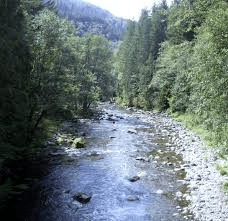
Salmon River near Mt Hood

Humans, according to a Caltech paper, think at a rate of 10 bits (binary digits) per second. However, our bodies’ sensory systems gather data about our environments at a rate of a billion bits per second, which is 100 million times faster than our thought processes. We are slow thinkers; and often cannot see the forest for the trees.

In 1890, concerning the notions of perception, conceptualization and, in turn, sagacity, William James wrote:

All our knowledge at first is vague. When we say that a thing is vague, we mean that it has no subdivisions ab intra , nor precise limitations ab extra ; but still all the forms of thought may apply to it. It may have unity, reality, externality, extent, and what not — thinghood , in a word, but [p. 344] thinghood only as a whole.  In this vague way, probably, does the room appear to the babe who first begins to be conscious of it as something other than his moving nurse. It has no subdivisions in his mind, unless, perhaps, the window is able to attract his separate notice. In this vague way, certainly, does every entirely new experience appear to the adult. A library, a museum, a machine-shop, are mere confused wholes to the uninstructed, but the machinist, the antiquary, and the bookworm perhaps hardly notice the whole at all, so eager are they to pounce upon the details. Familiarity has in them bred discrimination. Such vague terms as ‘grass,’ ‘mould,’ and ‘meat’ do not exist for the botanist or the anatomist. They know too much about grasses, moulds, and muscles. A certain person said to Charles Kingsley, who was showing him the dissection of a caterpillar, with its exquisite viscera, “Why, thought it was nothing but skin and squash!” A layman present at a shipwreck, a battle, or a fire is helpless. Discrimination has been so little awakened in him by experience that his consciousness leaves no single point of the complex situation accented aud [sic] standing out for him to begin to act upon. But the sailor, the fireman, and the general know directly at what corner to take up the business. They ‘see into the situation –that is, they analyze it — with their first glance. It is full of delicately differenced ingredients which their education has little by little brought to their consciousness, but of which the novice gains no clear idea.

He, of course, had a good deal more to say, as he always did, but that should suffice. He did put humans at the top of the list for sagacity. Brutes occupied the lower reaches. I beg to differ. I suggest that our vaunted ability to think and reason and speak is less a blessing and more a curse. The current state of the planet makes, I think, a good argument for this position.

Homo sapiens? Guess again.

If James’ opinion of ‘brutes’ is flawed, questions arise: Just how perceptive are brutes? And what exactly did he have in mind with that word? Whales perhaps? Or wolves? Or ravens; and how well do they communicate? how well are they integrated into their environments? Amphibians have existed for over 300 million years. Clever little devils. And just how intelligent might an osprey be? Are they, too, slow thinkers? Their hunts are successful only 25% of the time. Does this suggest a sluggish intellect? If pushed to an opinion, I would guess that all wild creatures perceive and process more efficiently than do humans. No living organism that I know of is at odds with its environment except human beings. The wonder might be that ospreys (and other wild creatures) survive as well as they do.

The birds seemed to have called it a day or merely have left the Salmon River for the nearby Sandy River. The Sandy is a bigger affair with more opportunities for a meal. All they need is several small fish or one larger one and they are replete (400 grams, it is thought). Perhaps the heat has sent them back to the nest. Are birds affected by heat? Birds are warm blooded and can regulate heat, so perhaps they have gone off to sit on a high limb in the shade. Whatever the case, even though they don’t stay long. It is always nice of them to drop by.

The sky is made a better place for the clear, sharp whistle calls of the fish hawks.

The temperature has reached 91° in the shade and it is not yet noon. Though the birds have abandoned the hunt, I am loath to leave the river. The wife has gone on to the post office and I’ll wait for her return. A dipper flits past, lands on a rock downstream and dives for a morsel. Of course, it may just be taking a quick dip to cool down. Robins, thrushes, jays all do the same. Our ponds are popular for bathing as well as drinking. Birds do seem to pant, but it is a different operation than how a dog pants. Birds can flutter their throat and cool in this manner.

I have worked up a sweat walking the quarter mile back to the house. No mail today. The wife has left me to check on a friend. Coming up our driveway, I take in the house. Two sides of the house are painted; the rest will have to wait for a break in the weather. Paint was drying on the brush faster than it could be applied. My wife, ever persistent, worked through two mornings and one early afternoon to get half the job done. 

I am concentrating on sanding and restaining our decks. The sanding does not begin until 9 AM out of consideration for the neighbors (and the hope that they will reciprocate). A two hour window in the morning cool has got me a quarter of the way through the job. Sitting by the river seemed a better occupation this morning, so I let the decks be.

A tomato and onion sandwich with a dab of Dijon mustard filled my belly, and a glass of ice tea and orange juice quenched my thirst. During lunch I listened to a few songs from Watchhouse and reflected on an interview with Emily Frantz and Andrew Marlin that I had seen recently. Our perceptions always affect us  on some personal level. Often we bite our tongues rather than speak and expose ourselves. Andrew, one of the best singer songwriters on the planet, was concerned about the rather personal nature of many of the songs on their new album. Then it occurred to him that everyone hears the song differently, and everyone makes it personal for themselves. The more empathy involved the closer one might come to someone else’s personal insights and emotions. But they then become our own, and the songs more often expose the listener’s emotions rather than the singer’s.

Many ‘brutes’ affect us the same way as do songs. Dogs and horses both have strong affinities with humans. Can we empathize with other critters? Those who work with animals would no doubt answer in the affirmative. Jane Goodall, for example, must have had some feeling and understanding for her apes. And Roger Payne must have felt privileged listening to and interacting with his whales.

Our friends know that they are welcome to drop by anytime, and many do. Most think there is a certain magic about our little piece of ground. We think it is simply a spirit of inclusion that we bring to the place. Spiders, newts, snakes, squirrels, ravens, skinks, raccoons, the odd black bear and the occasional osprey are all welcome. More directly, my wife and I have shared the place with over a dozen canine friends, mostly collies. An assorted group of cats also have roamed the place. And, not least in importance, we are surrounded by firs and cedars, a few hemlocks, some maples, cottonwoods and alders.

Brute has come to mean a savage and violent person or animal. For James in the 19th century, the word was more simply defined as an animal as opposed to a human being, an animal specifically lacking in intelligence. If we removed our opposition, we might all be considered brutes. When all is done and dusted, we are all animals, all part of the natural world, all interdependent.

Familiarity will breed discrimination, not for segregating, but for understanding; and with understanding comes both empathy and, most importantly, inclusion.

Thoth Hermes Trismegistus was, for the Egyptians, the god of wisdom, letters, and time. He had the body of a man and head of an ibis.

William James, Principles of Psychology, Vol. II; Dover Publications, New York.1890, p343.