SAGACITY

We are sitting on the rocks by the river waiting and watching as three ospreys circle overhead, hunting. The snow in the mountains has gone with the latest batch of hot weather; the river is low and, to our eyes, fish are scarce. What the ospreys see is, of course, something else again. Our vision is quite good. Some biologists think that our large brain became necessary to process all the perceptions our eyes (and other senses) take in, that our brain size has evolved more specifically with our visual acuity. Ospreys, apparently, can see twice as well as humans. However, that generalization does not tell the whole story: Osprey have the largest eyes relative to size of any animal; they have four color receptors to our three and can see ultraviolet light; their visual acuity due to a denser number of receptors is much better than ours; they can perceive the refractive index and so adjust their angle of vision to see beneath water’s surface; and ospreys can perceive magnetic fields to aid in navigation. Just how they process all this information  is unknown and, arguably, unknowable.
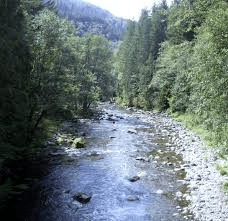
Salmon River near Mt Hood

Humans, according to a Caltech paper, think at a rate of 10 bits (binary digits) per second. However, our bodies’ sensory systems gather data about our environments at a rate of a billion bits per second, which is 100 million times faster than our thought processes. We are slow thinkers; and often cannot see the forest for the trees.

In 1890, concerning the notions of perception, conceptualization and, in turn, sagacity, William James wrote:

All our knowledge at first is vague. When we say that a thing is vague, we mean that it has no subdivisions ab intra , nor precise limitations ab extra ; but still all the forms of thought may apply to it. It may have unity, reality, externality, extent, and what not — thinghood , in a word, but [p. 344] thinghood only as a whole.  In this vague way, probably, does the room appear to the babe who first begins to be conscious of it as something other than his moving nurse. It has no subdivisions in his mind, unless, perhaps, the window is able to attract his separate notice. In this vague way, certainly, does every entirely new experience appear to the adult. A library, a museum, a machine-shop, are mere confused wholes to the uninstructed, but the machinist, the antiquary, and the bookworm perhaps hardly notice the whole at all, so eager are they to pounce upon the details. Familiarity has in them bred discrimination. Such vague terms as ‘grass,’ ‘mould,’ and ‘meat’ do not exist for the botanist or the anatomist. They know too much about grasses, moulds, and muscles. A certain person said to Charles Kingsley, who was showing him the dissection of a caterpillar, with its exquisite viscera, “Why, thought it was nothing but skin and squash!” A layman present at a shipwreck, a battle, or a fire is helpless. Discrimination has been so little awakened in him by experience that his consciousness leaves no single point of the complex situation accented aud [sic] standing out for him to begin to act upon. But the sailor, the fireman, and the general know directly at what corner to take up the business. They ‘see into the situation –that is, they analyze it — with their first glance. It is full of delicately differenced ingredients which their education has little by little brought to their consciousness, but of which the novice gains no clear idea.

He, of course, had a good deal more to say, as he always did, but that should suffice. He did put humans at the top of the list for sagacity. Brutes occupied the lower reaches. I beg to differ. I suggest that our vaunted ability to think and reason and speak is less a blessing and more a curse. The current state of the planet makes, I think, a good argument for this position.

Homo sapiens? Guess again.

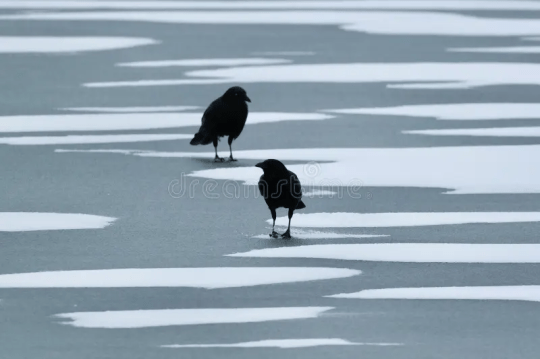
If James’ opinion of ‘brutes’ is flawed, questions arise: Just how perceptive are brutes? And what exactly did he have in mind with that word? Whales perhaps? Or wolves? Or ravens; and how well do they communicate? how well are they integrated into their environments? Amphibians have existed for over 300 million years. Clever little devils. And just how intelligent might an osprey be? Are they, too, slow thinkers? Their hunts are successful only 25% of the time. Does this suggest a sluggish intellect? If pushed to an opinion, I would guess that all wild creatures perceive and process more efficiently than do humans. No living organism that I know of is at odds with its environment except human beings. The wonder might be that ospreys (and other wild creatures) survive as well as they do.

The birds seemed to have called it a day or merely have left the Salmon River for the nearby Sandy River. The Sandy is a bigger affair with more opportunities for a meal. All they need is several small fish or one larger one and they are replete (400 grams, it is thought). Perhaps the heat has sent them back to the nest. Are birds affected by heat? Birds are warm blooded and can regulate heat, so perhaps they have gone off to sit on a high limb in the shade. Whatever the case, even though they don’t stay long. It is always nice of them to drop by.

The sky is made a better place for the clear, sharp whistle calls of the fish hawks.

The temperature has reached 91° in the shade and it is not yet noon. Though the birds have abandoned the hunt, I am loath to leave the river. The wife has gone on to the post office and I’ll wait for her return. A dipper flits past, lands on a rock downstream and dives for a morsel. Of course, it may just be taking a quick dip to cool down. Robins, thrushes, jays all do the same. Our ponds are popular for bathing as well as drinking. Birds do seem to pant, but it is a different operation than how a dog pants. Birds can flutter their throat and cool in this manner.

I have worked up a sweat walking the quarter mile back to the house. No mail today. The wife has left me to check on a friend. Coming up our driveway, I take in the house. Two sides of the house are painted; the rest will have to wait for a break in the weather. Paint was drying on the brush faster than it could be applied. My wife, ever persistent, worked through two mornings and one early afternoon to get half the job done. 

I am concentrating on sanding and restaining our decks. The sanding does not begin until 9 AM out of consideration for the neighbors (and the hope that they will reciprocate). A two hour window in the morning cool has got me a quarter of the way through the job. Sitting by the river seemed a better occupation this morning, so I let the decks be.

A tomato and onion sandwich with a dab of Dijon mustard filled my belly, and a glass of ice tea and orange juice quenched my thirst. During lunch I listened to a few songs from Watchhouse and reflected on an interview with Emily Frantz and Andrew Marlin that I had seen recently. Our perceptions always affect us  on some personal level. Often we bite our tongues rather than speak and expose ourselves. Andrew, one of the best singer songwriters on the planet, was concerned about the rather personal nature of many of the songs on their new album. Then it occurred to him that everyone hears the song differently, and everyone makes it personal for themselves. The more empathy involved the closer one might come to someone else’s personal insights and emotions. But they then become our own, and the songs more often expose the listener’s emotions rather than the singer’s.

Many ‘brutes’ affect us the same way as do songs. Dogs and horses both have strong affinities with humans. Can we empathize with other critters? Those who work with animals would no doubt answer in the affirmative. Jane Goodall, for example, must have had some feeling and understanding for her apes. And Roger Payne must have felt privileged listening to and interacting with his whales.

Our friends know that they are welcome to drop by anytime, and many do. Most think there is a certain magic about our little piece of ground. We think it is simply a spirit of inclusion that we bring to the place. Spiders, newts, snakes, squirrels, ravens, skinks, raccoons, the odd black bear and the occasional osprey are all welcome. More directly, my wife and I have shared the place with over a dozen canine friends, mostly collies. An assorted group of cats also have roamed the place. And, not least in importance, we are surrounded by firs and cedars, a few hemlocks, some maples, cottonwoods and alders.

Brute has come to mean a savage and violent person or animal. For James in the 19th century, the word was more simply defined as an animal as opposed to a human being, an animal specifically lacking in intelligence. If we removed our opposition, we might all be considered brutes. When all is done and dusted, we are all animals, all part of the natural world, all interdependent.

Familiarity will breed discrimination, not for segregating, but for understanding; and with understanding comes both empathy and, most importantly, inclusion.

Thoth Hermes Trismegistus was, for the Egyptians, the god of wisdom, letters, and time. He had the body of a man and head of an ibis.

William James, Principles of Psychology, Vol. II; Dover Publications, New York.1890, p343.

TWO POEMS

american centigrade

lean dogs crisscrunching backyard paths

frozen puddles of December rain blueblack

night …

a satellite crosses the southwestern sky

standing on the snowbanked

tumble of riverroar

boulders grumble midstream

jetstream desolate unseen

american centigrade

too much colder than farenheit

the litter of frozen crows, bleak blueblack nights …

someone saying the ol’ mercury dipped

down to 9 degrees just before sun up

jumble of ghetto poor drugsters

gamble and preen maelstrom

havoc undreamed

nights black and blue

frozen puddles of December rain

lean dogs crisscrunching back alley trash

1985 Brightwood

ilwaco wash

stiff winds down the jetty

whipping rain

rusting wrecks off disappointment

ilwaco wash

gray weathered trunks, masts

lapping dark pebbles

streaming crick cold in dense fog

through banks of white snow

otter tracks and deer droppings

damn, she says as

her pink slacks

droop down stumbling up the

drunken concrete steps

of dimaggio’s fisherman’s wharf

half-masted and damn, she says the

boozy old blond

oh damn

the pink slack salmon

lapping narrow ankles

bareassed

she stoops to retrieve

her pretty pink mudsullied pants

gathering in ilwaco wash

down the jetty of stiff winds

whipping rain

rusting the wrecks of disappointment

1995 Brightwood

WESTON NOW SITTING ON A PINE SHELF

a short story from CONVERSATIONS WITH A HYPOXIC DOG (A review is coming soon to BOOKS)

The clutter of the office made her uneasy. She wished to straighten and dust. The books were all in disarray. He had forbidden her to touch anything. This wasn’t the house, though live here he did. His life at the university. She rarely visited the place.

He had pushed books and papers aside to open the slender volume of black and white photographs. Simple it was; yet elegant. Just as the photographs were. He had decided at last to bring them hom

“They don’t say anything,” she said.

“Listen harder.”

“O cute. There’s no context here. Just pictures.”

“Photographs. Context all inclusive.”

“What? Like paintings?”

“Yes.”

“Abstracts, smear of paint and an onion skin. That sort of thing?”

“Yes.”

“They don’t say anything either. The nudes like the morgue on TV. They make me shiver.”

“Corpses?”

“Look at this one.”

They looked. The silence grew slowly palpable. She fidgeted at the buttons of her blouse. Her frazzled auburn hair framed a pale face, green eyes. An image of some prepubescent fat girl surreptitiously picking at her wedged underwear made him smile. He shifted his weight away from her. His hands found the pockets of his coat.

“Is it erotic? Do you think? Men see things different.”

She over bit her bottom lip and tilted her head towards him. Her hand touched his arm.

“She’s a little fat. Do I look like that? What do you think? Is she sexy?”

“Umm. If you want it to be.”

“That’s no answer.”

“Well, it’s not about sex. Not in the conventional sense.”

“Everything’s about sex. Or money. So nudes sell. Western makes money. That it?”

“Weston.”

“Whatever.”

“No.”

“No what?”

“It’s not about money.”

“I give up. What is it about?”

“Who’s on first.”

“What?”

“Nope. He’s on second.”

“Who’s on second?”

“Nope. Who’s on first.”

“Well, who is?”

“Exactly.”

He was laughing then and shaking his head. She turned to face him, and slapped him open handed on the shoulder.

“Aren’t we the superior one.”

“Come on, let’s get coffee. I’ll tell you a story about a dead squirrel.”

Past the window of Martinotti’s pedestrians passed looking in, the quick glance, looking away. He had waved to Jimmy as they entered and held up two fingers. They sat at a small square oak table near the front window amidst the clutter of the old delicatessen. The disarray provided ample distraction, and he always felt somehow invisible beside the wine crates and cheeses, the shelves of pasta, hanging garlic, odd groups of dishware, pots and pans, mishmash of tables, chairs and benches each with its newspaper, magazine or book, and the erratic hum and rumble of the heavy old coolers along the back wall.

“The place hasn’t changed much.” She had not been there since the summer. “Your classroom.” The woman sat and looked. He had taken the chair facing the window. “That girl was here with the others. What was her name? You told me once.”

“Celia,” he said.

“Celia. Odd name. I don’t like it much.”

Sunday morning. Gray skies. Drizzle. An old couple, each with salt and pepper hair, his in a pony tail, hers free down her back, sat at a round wooden table painted bright red. Their chairs were green. They sat together and sipped espresso from white demitasses. Animated conversation draped them with a confessional anonymity. He leaned in to her; he spoke; they laughed out loud together.

Envy turned him away from them. Many of the pedestrians walked past hooded and huddled. Young faces.  Many students in this district. Old buildings. There the Hotel Joyce. The rooms above the fish house. Rent by the hour, the day. Who would stay there longer? No one went to the Hotel Joyce for the view.

Jimmy arrived with their espresso. “How goes the war, my Professor?” he said, a hand deliberately placed on the man’s shoulder. A nod to the woman. “Mrs. Professor,” he said.

“No doubt we are overrun,” said the man.

“We are forced to live in our heads.”

The man nodding. “E il Patrone? How is your father, Jimmy?”

Jimmy put a hand to his ear and fingered the studded lobe. “Without Mama …” He shrugged.

“My condolences.”

Another touch of the shoulder. “Enjoy.”

The woman watched him walk away. She said, “How do you tolerate that queer?”

They sat in silence. She looked out the window. The old couple at the red table spoke now in Italian. The man had lit a cigar; a rich and redolent odor diffused. He then had suggested that the size of his cigar was not equal to the business proposed. The woman had murmured her response, and the old man had snorted his laughter.

Sipping the last of his coffee, he considered his wife.

Still turned away, she said, “So what has this Celia to do with a dead squirrel?”

“More coffee?”

“Tell me the story.”

“All right.”

They had come from the art museum. His student. His friend. A brilliant young woman. He was perhaps bewitched. Something in her left profile, an elegant line, and the delft blue of her eyes. Self-contained, yet mischievous. A boon companion never far from laughter. Yet her silences begged questions.

Teacher, student.

But student, teacher as well.

Of late, it seemed, both students.

And, of course, both teachers too.

From the museum that day they had come upon the Hotel Joyce. The allusion became in a moment the antidote for his illusions. He gave in gladly to tomfoolery.

Celia had said, “You wouldn’t dare.”

He had taken her by the hand and quickly through the door of the Hotel Joyce. The officious clerk looked on as bland as he was blank. Clean-shaven, younger than he should be, well spoken. Sitting on a stool behind a glass cage in a narrow, unkempt lobby.

“Good afternoon,” he said. “May I help you?”

Student leaps into hesitancy of Teacher’s sudden discomfiture.

Celia said, “My uncle and I need a room for the afternoon.”

Up the stairwell, co-conspirators, the laughter bursting from them. The key in the lock. After you, Gaston. But no, I insist. To a shabby disappointment. Smells dominated. Disinfectant. Mold. Cigarettes smoldering. The view of window and brick. Better to pull the shade. They sat somberly on the bed and inventoried the furnishings.

Threadbare carpet. Grayish. Frazzled. Stained. Clearly beyond redemption. Celia insisted on blood stained. Melodramatic, he replied. Frankie and Johnny, she said.

A nightstand thickly painted something brownish over greenish over sortawhitish. The color of sewage.

A lamp. The shade appeared to have a bite out of its lower end. They could not agree on this.

A chair. Against the far wall. But not so far in this small, narrow room. The chair painted to match the nightstand.

A painting, above the chair. Of flowers. Cut, arranged by chance in a vase of brilliant blue.

Off white walls. Water stained in that outside corner. Patched and not textured there on the hallway wall.

“Nice vase,” he said.

A shrug and tilt of head from her. Perhaps a smile.

They sat together on the bed and bounced to hear the springs creak and groan. They sat still.

“We’re not seeing what’s here,” Celia said.

“Not seeing a bathroom. Probably down the hall. European model.”

“No, listen. We’re making judgments. We’re abstracting the room.”

She sat to his right looking at the chair, the painting, the window. She studied the bare threads.

“Do you remember the squirrels,” she asked.

He smiled. “Oh yes,” he said.  Student takes teacher for a roller coaster ride, he thought.

“We were talking about love,” she said.

“We were on a run. We had broached a concept. I plead hypoxia.”

She hadn’t heard. “No, I had asked you about …”

“Medicating neuroses,” he said into her reluctance.

Her head nodded assent.

“Depression, for example,” he said.

She sat still.

He said to her, “A last resort, we agreed.”

“And you talked about simply waiting with the certain knowledge that things would change. Today it is raining. Tomorrow the sun shines. Yes? Something like?”

Springs squeaked, nearly a drunk’s hiccup, as she turned to him.

“Yes,” he said. “And then I boldly went on to suggest that love was an able antidote as well. Or could be. It requires mutuality.”

“‘Mutuality engenders beatification.’ Your phrase.”

Laughing. “Quiz on Tuesday,” he said.

“But we left love sort of … hanging?”

“Yes.”

“Who’s on first.”

“Yes. Perhaps that kind of ambiguity.”

“About love?”

“Yes.”

She looked past him out the window. “And then the two squirrels darted across the road in front of that van.”

He stood up and paced the room, across and back again. Standing at the window, through the geometry of the buildings a glint of sun from the distant river and just there the gentle arch of the bridge span.

“One ran quickly across,” she said. “The other …”

“Chasing la femme, his heart’s desire. Caught in the maelstrom. Froze and got tumbled end to end.”

“Yes,” she said. “But when the car passed, off again was our friend, the squirrel.”

He turned and grinned. “And as quickly as that, you tumbled my abstraction. You said …”

“‘That’s what love will get you.’” Her arms extended, smiling broadly; her hands turned elegantly up and open. “Ta da.”

Laughing then together. He took her hand and led her foot thumping down the stairwell to wave and grin stupidly at the officious clerk who, bless his soul, tipped a finger from his forehead. Perhaps he smiled.

She had been infectious.

Now the scrape of chairs. The old couple standing at their table. He helped her with the sleeve of her coat. She fixed his collar. A fellow wrapped in a tattered overcoat shuffled past the window. Einstein’s hair. Meaty Irish face.

“But …” She fiddled with her cup, turned the saucer. She centered the salt and pepper. Arranged a napkin. “You said dead squirrel. But the squirrel didn’t die.”

He watched the older couple through the door, watched as they passed before the window and then gone.

“That’s true.”

She waited.

He briefly smiled.

“You’re not saying anything.”

“Not much to say.”

“Well, professor, you are too obtuse today.” A coy smile.

He shrugged.

“You tell me that silly story and now expect me to understand these pictures.” She stared at him.

“Photographs.”

The woman blinked dramatically. Her lips met and then curled slightly in to a nip of teeth, her hands suddenly still.

“I’m sorry,” he said. “That was pedantic.” He put his hands on the table, drummed fingers lightly.

“Pedantic,” she mimicked.

“It’s like explaining a joke.”

“Try me.”

“Fuse the abstract with the concrete and a light illuminates the darkness. There’s more to a stone than hardness.”

“Hardness.”

“It’s what Hemingway did with his stories. It’s what Eliot did with his poetry. It’s what Weston did with his photographs. It’s what Celia had begun to do with hers.”

Her eyes narrowed. “That was her book.”

“Celia? Yes.”

“But it’s … it’s … that’s the one you gave to her.”

“Yes.”

“And she gave it back?”

“Yes.”

She sat back in her chair. Her head nodded slowly. “I remember now. She went off to … to …”

“Italy.”

Suddenly leaning in, she snapped, “You gave her that money.”

He looked back.

She turned away from him and looked out the window. Recrossed her legs.

The painted sign on the building’s back wall for The Hotel Joyce, the fish house below, faded and drab with time.

Angrily back, loudly, “Did you sleep with her too?”

He pushed his chair back abruptly and stood.

“No, don’t,” taking his arm. “I’m sorry. Don’t go.”

They sat in silence. He took their small cups to the counter at the back of the store. Jimmy ran both hands over his head flattening blond spikes.

“Another dose?” Jimmy asked.

“Yes.”

He moved slowly back through the cluttered room. The aroma of the cigar lingered. The faint scent of the woman. Coffee ever present. Dust motes in the window light.

He sat.

She looked to the window and back again. “Espresso,” she said. She looked at the man. “O why can’t you just be football and beer?”

Rain fell.

Tomorrow, sun.