SIMPLE ELEGANCE

Poetry is not everybody’s cup of tea. Nobel laureates Joseph Brodsky, Derek Walcott, and Seamus Heaney (friends, they were—ah, to be a fly on the wall when those three got together) suggest that literature in general and poetry in particular are the best tools for prying open the closed mind.

To acquire a taste for poetry is less difficult if the poems are neither lengthy nor too complex. Hamlet, despite Shakespeare’s reputation, might put one off. Many poems by Robert Frost might serve though it could be argued that he lacks elegance. 

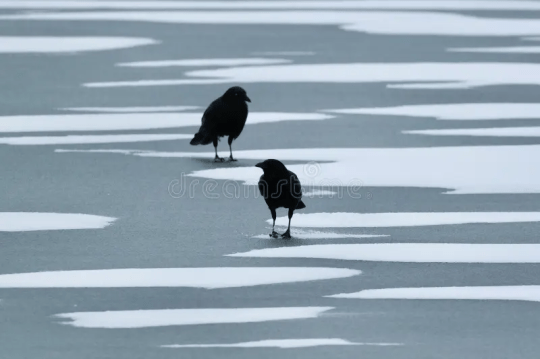
The cup pictured above is both simple and elegant. Many kayaks possess the same qualities. Classical guitars are relatively simple and certainly elegant. Simplicity is the quality of being plain or natural. Elegance, in this sense, is the quality of gracefulness and, perhaps, ingenuity.

Haiku are simple poems of seventeen Japanese syllables. With their origin some 800 years ago, they began as humorous and sometimes ribald forms of expression for Japanese wits much like the limerick in English. There was a young man from Boston who used to drive an Austin … That sort of business.

In the 17th century Matsuo Bashō changed all that. He was an inveterate traveler, walking many miles throughout Japan. His most famous composition is The Narrow Road To The Deep North. This book and his other travel journals were not only examinations of famous places in Japanese history, but also deep probes into his own psyche. His writing combined prose and poetry and both formal and informal themes.

Sleeping in a stall—fleas, lice, horse pissing nearby

Poems such as these are accessible and a good place to begin acquiring a taste for words so arranged. What elevated Bashō from both his contemporaries and his predecessors was his ability to select just the right word that captured a moment in his travels, but also offered insight and reflection. So, while his poetry may be an ideal place to begin, there seems to be no end to the consideration one might give to his words.

Breaking the silence of an ancient pond, a frog jumps into water—a deep resonance

Connoisseurs have spent lifetimes on those few words. The reason lies in the nature of the Japanese language. The initial suggestion was to begin with Japanese haiku. Even in translation, these poems offer more for the reader than do haiku in English or other languages. 

The penchant for rendering English haiku in three lines of five, seven, and five syllables is strictly an affectation. Bashō wrote his poems in one line that was either horizontal or vertical. Translations of Japanese haiku, older verses especially, are often given with the original kanji included. Kanji are the Chinese characters the Japanese adopted for their written language. This provides an opportunity for the reader to explore another dimension of the poems.

Kanji are simply picture words, miniature works of art. Anyone who enjoys jigsaw puzzles will have no problem deciphering kanji. A literal translation is not difficult to come by. Deciding on a more figurative rendering becomes something to ponder. Consider the title of Bashō’s most famous work:

Oku no Hosomichi

Pronunciation is straightforward. The vowels and consonant are much like Italian. Unlike English, there are no stressed syllables. The repetitive ‘o’ sound in the title is intentional; and this, of course, is lost in translation.

Nobuyuki Yuasa, whose rendering of the work has become a classic, suggests: Narrow Road to the Deep North

Others prefer Journey to the Interior. Literally, ‘oku’ means interior, ‘no’ gives to, and ‘hosomichi’ narrow road or path. The key point is contained in the word ‘oku.’ The notion of ‘interior,’ given the nature of Bashō’s intent, seems essential to any credible translation.

Nobuyuki is known for his figurative translations. Jane Reichhold, author of Bashō, The Complete Haiku, is more literal. Shades of meaning and depth of understanding are what are at stake.

Bashō’s so called ‘death poem,’ recited to his disciples, was translated by Reichold as:

ill on a journey

dreams in a withered field

wander around

My translation:

Sick on my journey,  dreams wander the withered  field

旅に病んで 夢は枯野を かけ
tabi ni yande/ yume wa kareno wo/ kakemeguru

The character above translates (see jisho.org) as ‘go around,’ ‘revolve’ and so becomes ‘wander.’ Japanese verbs, like German, come at the end of the sentence. Kakemeguru currently means ‘to rush about.’ For Bashō, in 1689, the word meant ‘to drift’ or ‘amble.’ Wander is sufficient and offers the alliteration with withered.

As Emerson suggested and others have seconded, art is all in the details. And once one is immersed in such minutiae as rhyme, alliteration, cutting words, season words, let alone meaning, one tends to leave one’s ego nestled quietly within the grey matter of one’s frontal lobe.

Information on Basho, The Complete Poems and The Narrow Road To The Deep North can be found in BOOKS.
A Conformity To Intelligence

2000 years ago, Marcus Aurelius wrote: Every instrument, tool, vessel, if it does that for which it is made, is well … In the things which are held together by nature there is within and there abides in them the power which made them … wherefore if thou dost live and act according to its will, everything in thee is in conformity to intelligence.

Whatever label one might choose for Webb Chiles, steadfast comes readily to mind . His life could be used as a case history of that virtue. Upon reflection, however, the more fitting adjective seems to be intelligent. To conceive, at a young age, the course of one’s life and embark resolutely on that course is the mark of an uncommon mind.

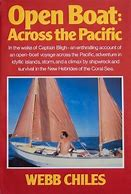
Chiles has made six circumnavigations, single handed for the most part, and written seven books about his exploits. These bald facts, though, don’t tell the story. Of his written works—all good reads—The Open Boat: Across The Pacific, and that book’s sequel, The Ocean Waits are the most compelling. To paraphrase William James, the books expose Chiles as a man intent upon ‘… tearing his conceptions from the continuum of felt experience.’

The books recount his attempt to sail around the world alone in an open boat. The boat chosen was an 18 foot Drascombe Lugger, named Chidiock Tichborne. A stout craft, she was pitch poled in the South Pacific after colliding with some object just below the surface, and was awash and a shambles when righted. He wrote: I just lay there, thinking, as do all wounded, how much had changed and how quickly, in the passing of a single wave. The sequel offers more of the same: from gales in the Indian Ocean to a jail cell in Saudi Arabia.

Intelligence guided by experience and a simple ability to endure earned his survival.

By his own reckoning, Webb Chiles has spent eight years of his life alone at sea. His preference, obviously, is for the open ocean. He resides on Skull Creek near the Atlantic, but it is a vexing business to reach the open sea from Skull Creek. Flukey river winds, miles of shoal water, and the torrent that is the Gulf Stream make leaving the land a tiresome business. Which is not to mention the frequent passage of large, notoriously indifferent vessels bound elsewhere.

Chiles is amazed to find himself 83 years old. He continues to sail. He continues to write. He continues to do his age in pushups. He continues to be the man he has become.

Countless magazine articles have featured Chiles, countless interviews. Three films have been made about his singular life. The Story Tellers, produced by Safe Harbor, may be the best of the three.

A link to the video is posted below. Watch the video; the man is a compelling story teller. His web log is ‘Self-Portrait In The Present Sea.’

The Story Tellers

The books of Webb Chiles are available at many vendors. Most are offered as either print books or ebooks. Some have become collectors items.

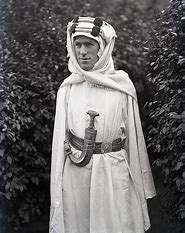
Lawrence Of Arabia

All men dream, but not equally. Those who dream by night in the dusty recesses of their minds, wake in the day to find that it was vanity: but the dreamers of the day are dangerous men, for they may act on their dreams with open eyes, to make them possible. T.E. Lawrence, The Seven Pillars Of Wisdom, 1922

Thomas Edward Lawrence (1888 – 1935), the man with three first names, was relatively short and slight, just 5’5″ tall. During the first World War, he played a critical role in the Arab fight to dislodge the Turks from Arabia. Great Britain had a vested interest in the area due to their political stake in Egypt and the Suez Canal. They nominally supported the Arabian tribes; but often needed to be prodded to get something done. Lawrence, and a few others like him, through diplomacy and guile managed to get the British military to move in support of the tribes. They were also responsible for uniting the disparate factions and for laying down the overall plan for the various campaigns.

Three films have been made about T. E. Lawrence. The David Lean film of 1962 won an Academy Award for best picture. Peter O’Toole played Lawrence. The film romanticized the struggle in the desert, but is adequate for gaining an overall feel for the plight of the Arabs under Turkish rule. If more insight is wanted, Lawrence’s book, Revolt In The Desert, gives a clearer version of the story. Neither book nor film will be entirely accurate.

Memory is a fallible intellectual process.

A further problem is that Revolt is a condensed version of Lawrence’s larger work titled The Seven Pillars Of Wisdom. At 400,000 words, the book is rightly considered a substantial tome. The problem arises from the fact that Lawrence lost the original manuscript, left in a case on a train. Indefatigable as the man was, he promptly sat down at his desk and rewrote the entire book. Errors and omissions most likely resulted from the rewrite.

The film version of course is further removed from reality. Just one example of how this occurs can be found in the disparity between the heights of Lawrence and that of O’Toole: Lawrence was 5’5″ and O’Toole was 6’2″. There is also the dubious scene where a man is consumed by quick sand. This is simply a myth of Hollywood.

Media always embellishes and adapts to suit its needs.

The Beduin of the desert, born and grown up in it, had embraced with all his soul this nakedness too harsh for volunteers, for the reason, felt but inarticulate, that there he found himself indubitably free. T.E. Lawrence, The Seven Pillars Of Wisdom, 1922

Information on Revolt In The Desert and The Seven Pillars Of Wisdom can be found in BOOKS.